
Peptide Delivery Methods in Research: Subcutaneous, Intranasal, Oral, and Transdermal
Written by NorthPeptide Research Team | Reviewed March 11, 2026
How a peptide enters the body determines everything that happens next — its bioavailability, onset of action, tissue distribution, and ultimately the quality of research data it produces. For investigators designing preclinical studies, the choice of administration route is not an afterthought; it is a foundational experimental variable that shapes every downstream result.
The research peptide landscape in 2026 encompasses four primary delivery methods: subcutaneous injection, intranasal administration, oral delivery, and transdermal application. Each route presents distinct advantages and limitations rooted in pharmacokinetics, enzymatic barriers, and tissue-specific targeting. Understanding these differences allows researchers to match the delivery route to the peptide's physicochemical properties and the study's objectives.
This guide examines the scientific literature behind each delivery method, compares bioavailability profiles, and explores why certain peptides have become associated with specific administration routes in research settings.
Subcutaneous Injection: The Research Standard
Subcutaneous (SC) injection remains the dominant delivery route for peptide therapeutics in both clinical and preclinical settings. According to a comprehensive review by Zhang et al. (2020), over 90% of peptide-based drug products are administered parenterally, with subcutaneous injection accounting for approximately 33% of all approved peptide therapeutics — second only to intravenous delivery at 44%.
Why Subcutaneous Dominates
The preference for SC injection in peptide research stems from several pharmacokinetic advantages. When a peptide is injected into the subcutaneous tissue — the fat layer between the dermis and muscle fascia — it enters a depot from which it gradually absorbs into the systemic circulation via capillaries and lymphatic vessels. This produces a more sustained absorption profile compared to intravenous bolus delivery, often with bioavailability ranging from 50% to nearly 100% depending on the peptide.
A detailed pharmacokinetic analysis by Bittner et al. (2021) demonstrated that injection site selection significantly affects peptide absorption. Among 18 peptides with molecular weights under 16 kDa, 50% showed injection site-dependent pharmacokinetics. Peptides with rapid absorption (Tmax ≤ 2 hours) or low plasma protein binding were most sensitive to injection site variation — a critical variable that researchers must control in study design.
Subcutaneous Catabolism: The Hidden Variable
One underappreciated factor in SC delivery is presystemic catabolism at the injection site. As highlighted by Kagan et al. (2022), enzymes present in subcutaneous adipose tissue — particularly dipeptidyl peptidase-4 (DPP-4) — can degrade peptides during transit through the interstitial space and lymph fluid before they reach systemic circulation. This is particularly relevant for GLP-1 analogs, where early-generation peptides like exenatide and lixisenatide showed significantly lower bioavailability than engineered variants like semaglutide that resist enzymatic degradation.
Peptides Commonly Studied via SC Injection
The majority of research peptides are investigated using subcutaneous injection as the primary route. These include growth hormone secretagogues like Sermorelin, recovery peptides like BPC-157 and TB-500, metabolic peptides like AOD-9604, and anti-aging compounds like Epithalon. SC injection provides consistent dosing, predictable pharmacokinetics, and the ability to deliver peptides that would be destroyed in the gastrointestinal tract.
Reconstituting lyophilized peptides with bacteriostatic water is a prerequisite for SC injection. For a complete guide to this process, see our article on how to reconstitute peptides for research.
Intranasal Delivery: Bypassing the Blood-Brain Barrier
Intranasal administration has gained significant research attention as a non-invasive route for delivering neuropeptides directly to the central nervous system. The unique anatomy of the nasal cavity provides two pathways that bypass the blood-brain barrier (BBB) — a biological obstacle that excludes over 98% of small molecules and virtually all peptides from the brain when administered systemically.
The Two Nose-to-Brain Pathways
A comprehensive review by Gänger and Schindowski (2018) detailed the two primary nose-to-brain transport pathways:
The Olfactory Pathway: Peptides deposited on the olfactory epithelium at the roof of the nasal cavity can be transported along olfactory nerve fibers directly to the olfactory bulb and then to deeper brain structures including the hippocampus and cortex. Transport occurs via two mechanisms: intracellular axonal transport (slower, involving endocytosis and vesicular trafficking) and extracellular bulk flow through perineural channels (faster, reaching the brain within minutes).
The Trigeminal Pathway: Johnson et al. (2010) demonstrated that the trigeminal nerve, which innervates the nasal respiratory mucosa, provides a second route to the brainstem and other CNS regions. The ethmoidal, posterior nasal, and nasopalatinal branches of the trigeminal nerve all contribute to nose-to-brain transport.
Semax: The Intranasal Neuropeptide Model
Perhaps no peptide better illustrates intranasal delivery's potential than Semax (MEHFPGP), a synthetic analog of ACTH(4-7) with a C-terminal Pro-Gly-Pro stabilizing sequence. Eremin et al. (2006) demonstrated that after intranasal administration (50 μg/kg), 0.093% of the total radioactivity per gram was detectable in the rat brain within just 2 minutes, with 80% of that radioactivity corresponding to intact Semax. This rapid CNS penetration is unachievable with systemic injection due to the BBB.
The rapid enzymatic degradation of Semax in the nasal cavity — with the tripeptide Pro-Gly-Pro being the major metabolite — highlights both the challenge and the advantage of intranasal delivery. The peptide reaches the brain quickly enough to exert effects before complete degradation, while the non-invasive route avoids the pain and compliance issues of injection.
Selank: Anxiolytic Peptide via the Nasal Route
Selank, a synthetic analog of the immunomodulator tuftsin, is another peptide extensively researched via intranasal delivery. Studies have shown that Selank reaches approximately 0.16% of the administered dose in the rat brain — nearly double the brain penetration of Semax — supporting its investigation as an anxiolytic agent that may modulate GABA-A receptors and serotonin metabolism without the sedative effects associated with benzodiazepines.
Advantages and Limitations
Intranasal delivery offers several advantages for neuroactive peptide research: non-invasive administration, rapid onset (peak brain concentrations typically within 30–80 minutes), avoidance of first-pass hepatic metabolism, and direct CNS access. However, significant limitations include the enzymatic barrier of the olfactory epithelium, variable deposition depending on technique, limited dose volume (typically 100–200 μL per nostril), and mucociliary clearance that removes unabsorbed peptide within 15–20 minutes.
For a deeper comparison of intranasal neuropeptides, see our guide to nootropic peptides compared: Semax, Selank, and Cerebrolysin.
Oral Delivery: The BPC-157 Exception
Oral peptide delivery has long been considered the holy grail of pharmaceutical science — and for good reason. The gastrointestinal tract presents a formidable series of barriers: stomach acid (pH 1.0–3.0), pepsin in the gastric lumen, pancreatic proteases (trypsin, chymotrypsin, elastase) in the small intestine, brush border peptidases, and the tight junctions of the intestinal epithelium that prevent paracellular absorption of large molecules.
Why Most Peptides Fail Orally
Renukuntla et al. (2013) detailed the cascade of enzymatic degradation that awaits orally administered peptides. Pepsin attacks peptide bonds between hydrophobic amino acids at low pH. In the duodenum, trypsin cleaves after Arg and Lys residues while chymotrypsin targets aromatic residues. Even peptides that survive luminal digestion face brush border endopeptidases and exopeptidases, followed by cytosolic enzymes in enterocytes. The result is that most peptides have oral bioavailability below 1–2%.
Peng et al. (2023) reviewed the current strategies for overcoming these barriers: pH modulation with citric acid to inhibit peptidase activity, co-formulation with protease inhibitors like aprotinin, PEGylation to shield peptide bonds, and encapsulation in nanoparticles or liposomes. Despite decades of effort, only a handful of oral peptide products have reached the market, most notably oral semaglutide (Rybelsus), which uses the absorption enhancer SNAC (sodium N-[8-(2-hydroxybenzoyl) amino] caprylate) to achieve approximately 1% bioavailability.
BPC-157: The Gastric Pentadecapeptide
BPC-157 (Body Protection Compound-157) occupies a unique position in the peptide landscape due to its remarkable gastric stability. Unlike virtually every other peptide studied, BPC-157 has been shown to remain stable in human gastric juice for over 24 hours — a property that has earned it the designation "stable gastric pentadecapeptide."
Seiwerth et al. (2021) reviewed the extensive preclinical literature demonstrating that BPC-157 is active when administered orally, without requiring any carrier, adjuvant, or protease inhibitor. This is a striking distinction from other peptides, which are functionally dependent on carrier systems or rapidly destroyed in gastric juice. The peptide has shown activity in oral studies across multiple tissue systems including gastrointestinal, musculoskeletal, and nervous system models.
However, the pharmacokinetic data on oral BPC-157 remains limited. Only one study has formally characterized BPC-157 absorption, distribution, metabolism, and excretion (ADME) in rats and dogs, with intramuscular bioavailability reported at 14–19% in rats and 45–51% in beagle dogs. The oral bioavailability specifically has not been precisely quantified in published pharmacokinetic studies, though the consistent preclinical efficacy of oral dosing suggests meaningful absorption.
The Oral Delivery Frontier
Research continues to push the boundaries of oral peptide delivery. Nanoparticle encapsulation, intestinal permeation enhancers, and self-emulsifying drug delivery systems (SEDDS) are all under investigation. For researchers working with peptides that lack BPC-157's inherent stability, these technologies may eventually expand the oral route beyond its current limitations.
Transdermal Delivery: Cosmetic and Topical Peptides
Transdermal peptide delivery — absorption through the skin — is primarily relevant to cosmetic peptides targeting cutaneous tissues rather than systemic circulation. The stratum corneum, the outermost layer of the epidermis, functions as a lipophilic barrier that effectively excludes hydrophilic molecules larger than approximately 500 Daltons. Most bioactive peptides exceed this threshold, making unassisted transdermal delivery challenging for systemic effects.
GHK-Cu: Copper Peptide Skin Penetration
GHK-Cu (glycyl-L-histidyl-L-lysine copper complex) is the most extensively studied transdermal research peptide. Hostynek et al. (2011) quantified GHK-Cu penetration through human skin in vitro, reporting a permeability coefficient of 2.43 ± 0.51 × 10⁻⁴ cm/h. Over 48 hours, 136.2 ± 17.5 μg/cm² of copper permeated 1 cm² of dermatomed skin — potentially therapeutically relevant amounts for local anti-inflammatory and tissue repair effects.
Pickart and Margolina (2018) highlighted that while GHK-Cu can penetrate the stratum corneum, its hydrophilic nature limits deep dermal penetration. This has driven research into enhancement strategies including liposomal encapsulation, nanosized delivery vehicles, and oligoarginine conjugation. Microneedle-assisted delivery has also shown promise for increasing GHK-Cu skin permeation in a controlled manner.
What makes GHK-Cu particularly interesting for transdermal application is that its primary targets — dermal fibroblasts, keratinocytes, and the extracellular matrix — are located within the skin itself. Pickart et al. (2015) documented that GHK-Cu modulates over 4,000 human genes, many involved in collagen synthesis, antioxidant defense, and tissue remodeling. For these cutaneous targets, topical application may be more appropriate than systemic delivery. For more on GHK-Cu's non-dermal research, see our article on copper peptides beyond skincare.
SNAP-8: Neuromuscular Peptide Topical Application
SNAP-8 (acetyl octapeptide-3) represents a different approach to transdermal peptide use. Rather than systemic delivery, SNAP-8 is designed to act at the neuromuscular junction of facial muscles when applied topically. The peptide is a synthetic fragment that mimics the N-terminal end of SNAP-25 (synaptosomal-associated protein of 25 kDa), one of the SNARE complex proteins required for neurotransmitter vesicle fusion.
In vitro studies have reported that SNAP-8 can reduce SNARE complex formation, potentially limiting acetylcholine release at the neuromuscular junction. Clinical studies of topical formulations have reported wrinkle depth reductions of up to 63% in some assessments, with a 38% reduction observed within 28 days of regular application in controlled studies.
However, the mechanism of transdermal SNAP-8 delivery to the neuromuscular junction remains debated. The stratum corneum barrier, the distance from the skin surface to underlying facial muscles, and the lack of formal pharmacokinetic data for topical SNAP-8 all represent gaps in the current understanding. Most commercial applications rely on cream or serum formulations at concentrations of 3–10%.
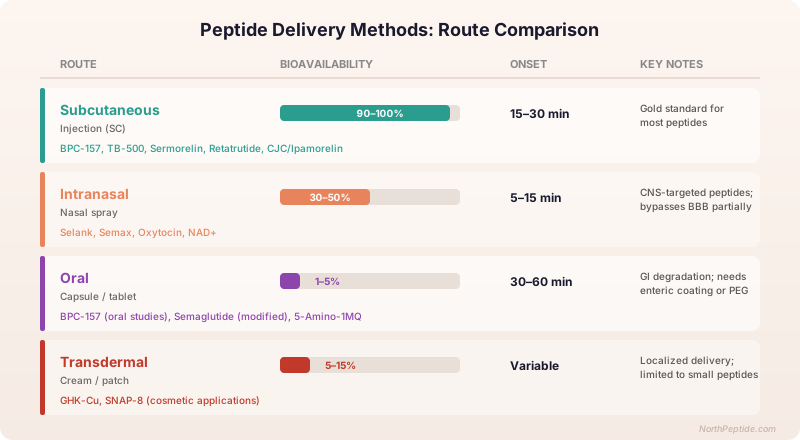
Bioavailability Comparison by Administration Route
The following table summarizes typical bioavailability ranges and key characteristics for each peptide delivery route based on published research data. It is important to note that individual peptide properties — molecular weight, charge, hydrophobicity, enzymatic susceptibility — can significantly shift these values.
| Route | Typical Bioavailability | Onset | Key Advantages | Key Limitations | Example Peptides |
|---|---|---|---|---|---|
| Subcutaneous Injection | 50–100% | 15–60 min | High bioavailability, predictable PK, depot effect | Requires reconstitution, injection site variability, presystemic catabolism | Sermorelin, BPC-157, TB-500, Epithalon, AOD-9604 |
| Intranasal | 1–10% (systemic); up to 0.16% brain penetration | 2–30 min (CNS) | BBB bypass, non-invasive, rapid CNS onset | Low absolute bioavailability, mucociliary clearance, enzymatic barrier, technique-dependent | Semax, Selank, Oxytocin |
| Oral | <1–2% (most peptides); BPC-157 significantly higher | 30–90 min | Non-invasive, convenient, no sterile preparation | Gastric acid, proteolytic enzymes, poor epithelial permeation | BPC-157 (stable), Oral Semaglutide (with SNAC enhancer) |
| Transdermal/Topical | Variable (local); minimal systemic | Hours (local effects) | Non-invasive, sustained local delivery, patient-friendly | Stratum corneum barrier, limited to small peptides, poor systemic absorption | GHK-Cu, SNAP-8, Argireline |
Choosing the Right Delivery Route: A Researcher's Decision Framework
Selecting the appropriate administration route is a critical early decision in peptide research design. Several factors should guide this choice:
Target Tissue Accessibility
If the research target is in the CNS, intranasal delivery may provide direct access that systemic injection cannot. For dermal targets, topical application may be most appropriate. For systemic targets or peripheral tissues, subcutaneous injection typically provides the most reliable pharmacokinetics.
Peptide Stability Profile
The peptide's enzymatic vulnerability dictates which routes are feasible. Most linear peptides with natural amino acids are rapidly degraded in the GI tract, ruling out oral delivery. Cyclic peptides, peptides with D-amino acids, or inherently stable sequences like BPC-157 may tolerate oral administration. For more on peptide stability, see our guide to peptide stability and degradation.
Molecular Weight and Physicochemical Properties
Small, hydrophobic peptides may penetrate skin for transdermal delivery. Larger hydrophilic peptides generally require injection. The 500 Dalton rule provides a rough threshold for transdermal permeation, though delivery-enhancing technologies can extend this range.
Study Design Requirements
Dose precision, reproducibility, and the ability to measure pharmacokinetic parameters may favor injection routes. Chronic dosing studies may benefit from the convenience of intranasal or oral routes if the peptide permits. The trade-off between dosing precision and practical administration frequency must be evaluated for each study.
Emerging Delivery Technologies
The peptide delivery landscape continues to evolve rapidly. Several emerging technologies are expanding the routes available to researchers:
Microneedle Patches
Dissolving microneedle arrays that painlessly penetrate the stratum corneum can deliver peptides directly into the viable epidermis and dermis. Research has demonstrated successful microneedle delivery of GHK-Cu and insulin, with the potential for self-administration in chronic dosing protocols.
Nanoparticle Encapsulation
Lipid nanoparticles, polymeric nanoparticles, and liposomes can protect peptides from enzymatic degradation and enhance absorption across biological barriers. These technologies are being explored for oral, intranasal, and transdermal peptide delivery.
Cell-Penetrating Peptides (CPPs)
Conjugation with cell-penetrating sequences like TAT, penetratin, or oligoarginine can enhance cellular uptake and transcellular transport. Oligoarginine conjugation has been shown to accelerate GHK cellular penetration both in vitro and in vivo.
Self-Emulsifying Drug Delivery Systems (SEDDS)
For oral delivery, SEDDS formulations create nanoscale emulsions upon contact with gastrointestinal fluids, protecting the peptide cargo from enzymatic degradation while enhancing epithelial absorption.
Practical Considerations for Research
Beyond pharmacokinetics, practical factors influence route selection in the research setting:
Storage and Reconstitution: Injectable peptides typically require lyophilized storage and reconstitution with bacteriostatic water. For detailed reconstitution protocols, see our reconstitution guide.
Dose Accuracy: Subcutaneous injection with calibrated syringes offers the highest dose precision. Intranasal metered-dose devices provide reasonable accuracy. Oral and topical dosing are inherently less precise.
Stability During Delivery: Reconstituted peptide solutions degrade over time. Storage conditions between reconstitution and injection affect peptide integrity. For comprehensive storage guidance, see our article on how to store peptides properly.
Compliance and Throughput: For studies requiring frequent dosing over extended periods, non-invasive routes (oral, intranasal) may improve protocol adherence. However, this must be balanced against pharmacokinetic variability.
Products mentioned in this article:
Summary of Key Research References
| Study | Year | Type | Focus | Reference |
|---|---|---|---|---|
| Zhang et al. | 2020 | Review | Prevalence of peptide therapeutic products | PMC10655677 |
| Gänger & Schindowski | 2018 | Review | Intranasal nose-to-brain delivery formulations | PMC6161189 |
| Johnson et al. | 2010 | Preclinical | Trigeminal nose-to-brain pathway | PMC2892271 |
| Trevino et al. | 2020 | Review | Non-invasive nose-to-brain strategies | PMC7836101 |
| Renukuntla et al. | 2013 | Review | Oral bioavailability of peptides and proteins | PMC3680128 |
| Peng et al. | 2023 | Review | Oral peptide and protein delivery challenges | PMC10990675 |
| Seiwerth et al. | 2021 | Review | BPC-157 stability and wound healing | PMC8275860 |
| Hostynek et al. | 2011 | In vitro | GHK-Cu skin penetration by layer | PMC3016279 |
| Pickart & Margolina | 2018 | Review | GHK-Cu regenerative actions and gene data | PMC6073405 |
| Pickart et al. | 2015 | Review | GHK peptide modulation of cellular pathways | PMC4508379 |
| Vukojevic et al. | 2021 | Review | BPC-157 and the central nervous system | PMC8504390 |
Written by NorthPeptide Research Team
Ready to explore research-grade peptides?
Research Disclaimer
For laboratory and research use only. Not for human consumption.
This article is intended solely as a summary of published scientific research. It does not constitute medical advice, treatment recommendations, or an endorsement for any therapeutic purpose. The research discussed herein is predominantly preclinical, and results may not translate to human outcomes. Researchers should consult relevant institutional review boards and regulatory guidelines before designing studies involving these compounds.
NorthPeptide supplies research-grade peptides for legitimate scientific investigation. All products are sold strictly for laboratory and research purposes.