
BPC-157: Research, Mechanism of Action & Studies
Written by NorthPeptide Research Team | Reviewed December 15, 2025
Written by NorthPeptide Research Team
Ready to explore research-grade peptides?
For laboratory and research use only. Not for human consumption.
Quick summary: BPC-157, short for Body Protection Compound-157, is a synthetic pentadecapeptide composed of 15 amino acids with the sequence Gly-Glu-Pro-Pro-Pro-Gly-Lys-Pro-Ala-Asp-Asp-Ala-Gly-Leu-Val. It is derived from a protective protein found naturally in human gastric juice, though the synthetic form used...
What Is BPC-157?
BPC-157, short for Body Protection Compound-157, is a synthetic pentadecapeptide composed of 15 amino acids with the sequence Gly-Glu-Pro-Pro-Pro-Gly-Lys-Pro-Ala-Asp-Asp-Ala-Gly-Leu-Val. It is derived from a protective protein found naturally in human gastric juice, though the synthetic form used in research is a partial sequence of that larger parent protein, not a direct isolate.
What distinguishes BPC-157 from many other peptides studied in laboratory settings is its remarkable stability in gastric acid. Most peptides degrade rapidly when exposed to the acidic environment of the stomach, but BPC-157 has demonstrated resistance to this breakdown in preclinical models. This stability has made it a subject of particular interest in gastrointestinal research, where oral administration is often impractical with conventional peptide compounds.
Since its initial characterization in the early 1990s, BPC-157 has been investigated in over 100 preclinical studies across multiple research domains, including musculoskeletal healing, gastrointestinal protection, neuroprotection, and organ injury models. A 2025 literature and patent review published in Molecules described BPC-157 as a peptide of "multifunctionality," noting its investigation across a broad range of tissue types and injury models (PMC11859134).
Despite this extensive preclinical record, it is important to note from the outset that the vast majority of BPC-157 research has been conducted in animal models, primarily rodents. Human evidence remains extremely limited, a point explored in detail later in this guide.
NorthPeptide offers research-grade BPC-157. View details →
How BPC-157 Works: Mechanism of Action
The mechanisms through which BPC-157 exerts its observed effects in research models are complex and appear to involve multiple interconnected signaling pathways. Rather than acting on a single receptor or target, BPC-157 has been described in the literature as influencing several biological systems simultaneously. The following pathways have been identified in preclinical studies:
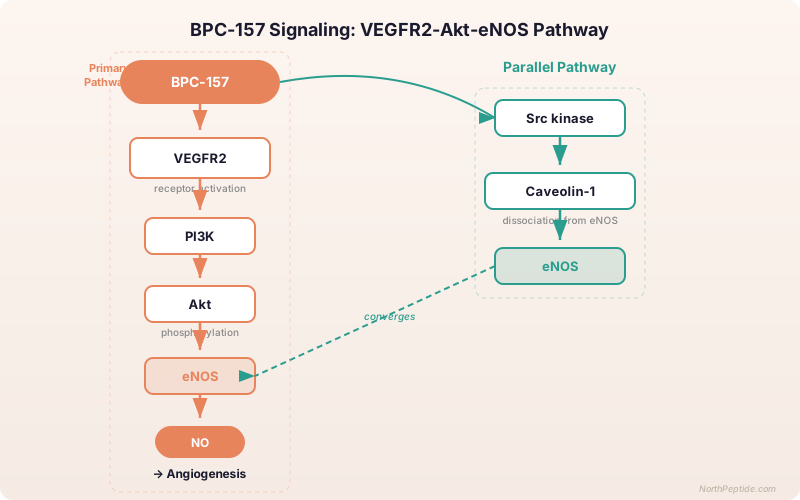
- VEGFR2 pathway and angiogenesis — BPC-157 has been observed to upregulate vascular endothelial growth factor receptor 2 (VEGFR2), a key driver of new blood vessel formation. Angiogenesis is essential for tissue repair, as new vasculature delivers oxygen and nutrients to injured areas. Multiple studies have documented increased blood vessel density in BPC-157-treated tissue samples.
- JAK-2 / STAT3 signaling — The Janus kinase 2 (JAK-2) and signal transducer and activator of transcription 3 (STAT3) pathway plays a role in cell proliferation, survival, and immune response. Research has indicated that BPC-157 may activate this pathway, which is implicated in wound healing and inflammatory modulation.
- Akt-eNOS axis and nitric oxide production — BPC-157 has been investigated for its interaction with the Akt (protein kinase B) and endothelial nitric oxide synthase (eNOS) pathway, which regulates nitric oxide (NO) production. Nitric oxide is a critical signaling molecule involved in vasodilation, blood flow regulation, and tissue repair processes. Studies suggest that BPC-157 may promote NO release, contributing to its observed vascular and healing effects.
- FAK-paxillin pathway — Focal adhesion kinase (FAK) and paxillin are proteins central to cell migration and adhesion — processes fundamental to wound closure and tissue remodeling. Research has indicated that BPC-157 may activate this pathway, potentially explaining its observed effects on cell motility in injury models.
- Growth hormone receptor expression — A 2018 study published in Growth Factors demonstrated that BPC-157 enhanced the expression of growth hormone receptors in tendon fibroblasts, suggesting a mechanism through which it may support tendon repair processes at the cellular level (PMC6271067).
- Anti-inflammatory cytokine modulation — BPC-157 has been observed to influence the balance of pro-inflammatory and anti-inflammatory cytokines in multiple research models, potentially shifting the immune response toward resolution rather than chronic inflammation.
- Neurotransmitter system interactions — A 2021 review on BPC-157 and the central nervous system documented interactions with the dopaminergic, serotonergic, and GABAergic systems. The authors noted that BPC-157 appeared to modulate dopamine and serotonin turnover in brain tissue, and interacted with the GABAergic system in ways that warrant further investigation (PMC8504390).
It is worth emphasizing that these mechanisms have been identified primarily through in vitro (cell culture) and in vivo (animal model) studies. The extent to which these pathways are activated in human physiology under equivalent conditions remains an open research question.
Musculoskeletal Research
The musculoskeletal system represents the most extensively studied area of BPC-157 research, encompassing investigations into tendon, muscle, ligament, and bone repair. A landmark 2025 systematic review by Vasireddi et al., published in the Journal of Experimental Orthopaedics, analyzed 36 studies on BPC-157 in orthopaedic and sports medicine contexts, providing the most comprehensive synthesis of this research to date (PMC12313605).
Tendon Healing Studies
Tendon injuries are among the most frequently studied applications of BPC-157 in preclinical models. Research using Achilles tendon transection models in rats has observed that BPC-157-treated tendons demonstrated improved biomechanical properties, including greater tensile strength and more organized collagen fiber alignment compared to controls. Rotator cuff injury models have produced similar findings, with treated tissues showing accelerated healing markers at the cellular level.
The 2018 study on growth hormone receptor expression in tendon fibroblasts (PMC6271067) provided a potential mechanistic explanation for these observations, suggesting that BPC-157 may enhance the responsiveness of tendon cells to growth signals during the repair process.
Muscle Injury and Recovery Research
In muscle crush injury models, BPC-157 administration has been associated with faster functional recovery and reduced fibrotic scar tissue formation. Studies have documented earlier restoration of muscle contractile function in treated groups compared to controls, with histological analyses revealing more organized muscle fiber regeneration.
Ligament and Bone Research
Medial collateral ligament (MCL) injury models have shown improved ligament healing biomechanics with BPC-157 treatment in rodent studies. Bone fracture healing research, while less extensive, has investigated BPC-157's potential role in osteogenesis, with some studies reporting enhanced callus formation and mineralization in treated animals.
Systematic Review Findings
The Vasireddi et al. 2025 systematic review concluded that preclinical evidence for BPC-157 in musculoskeletal healing is "promising but limited by the lack of human clinical data." The review noted consistent positive outcomes across multiple tissue types and injury models, but emphasized that 35 of the 36 studies analyzed were conducted in animal models. A 2025 narrative review titled "Regeneration or Risk?" echoed these findings, calling for rigorous human trials before clinical conclusions can be drawn (PMC12446177).
Gastrointestinal Research
Given BPC-157's origin as a fragment of a gastric juice protein, its investigation in gastrointestinal (GI) models is both logical and extensive. The GI tract was, in fact, the first major area of BPC-157 research, and the body of preclinical literature here is substantial.
Gastric Ulcer Models
BPC-157 has been studied in multiple gastric ulcer models, including those induced by ethanol, restraint stress, and cysteamine. Across these models, research has consistently observed reductions in ulcer size and improvements in mucosal healing metrics in BPC-157-treated groups. The peptide's gastric acid stability is particularly relevant in this context, as it allows oral administration in experimental protocols — a route not feasible with most peptide compounds.
Inflammatory Bowel Disease Preclinical Studies
In rodent models designed to mimic inflammatory bowel disease (IBD), including both colitis and Crohn's-like models, BPC-157 has been investigated for its effects on mucosal integrity and inflammatory markers. Studies have reported reduced colonic damage scores, lower levels of inflammatory infiltrate, and improved tissue architecture in treated groups. However, these models represent simplified versions of complex human diseases, and direct extrapolation to human IBD is not supported by current evidence.
NSAID-Induced Injury Protection Research
Nonsteroidal anti-inflammatory drugs (NSAIDs) are well known to cause gastrointestinal damage, including ulceration and bleeding. Several preclinical studies have investigated whether BPC-157 co-administration may attenuate NSAID-induced GI lesions in animal models. These studies have generally reported protective effects, with reduced lesion severity in BPC-157-treated groups exposed to various NSAID compounds.
Fistula and Anastomotic Healing Models
Research has also examined BPC-157 in surgical healing contexts, including intestinal fistula and anastomotic site models. Anastomotic leaks are a significant complication in GI surgery, and preclinical investigations have reported improved healing parameters at anastomotic sites in BPC-157-treated animals, including increased bursting pressure and collagen deposition.
2025 Gastroenterology Research
A 2025 abstract presented at the American College of Gastroenterology (ACG) annual meeting explored oral BPC-157 as an "emerging adjunct" in gastrointestinal research, noting interest in its potential interactions with standard GI therapeutic approaches. While this abstract represents early-stage investigation, it signals continued academic interest in BPC-157's gastrointestinal research profile (ACG 2025, Abstract S808).
Neuroprotective Research
The investigation of BPC-157 in central and peripheral nervous system models represents a growing area of preclinical research. A comprehensive 2021 review titled "BPC 157 and the Central Nervous System" catalogued the peptide's observed interactions with multiple neurotransmitter systems and neuroprotective mechanisms (PMC8504390).
Central Nervous System Studies
In rodent models, BPC-157 has been investigated in the context of traumatic brain injury, cerebral ischemia, and neurotoxin exposure. Studies have reported reductions in lesion size, improved behavioral outcomes, and attenuated neuroinflammatory markers in treated groups. The peptide's interactions with the dopaminergic system have been of particular interest, with research demonstrating modulation of dopamine release and receptor sensitivity in various brain regions.
Neurotransmitter Modulation Research
Beyond dopamine, BPC-157 research has documented interactions with serotonergic and GABAergic pathways. The 2021 CNS review noted that BPC-157 appeared to counteract the effects of both dopamine agonists and antagonists in certain experimental paradigms, suggesting a modulatory rather than purely stimulatory or inhibitory role. This "stabilizing" effect on neurotransmitter systems has been described as one of BPC-157's more distinctive observed properties in preclinical literature.
Peripheral Nerve Injury Models
Sciatic nerve transection and crush injury models have been used to investigate BPC-157's effects on peripheral nerve regeneration. Studies have reported improved nerve fiber regrowth, reduced muscle atrophy in denervated tissues, and faster return of sensorimotor function in BPC-157-treated animals compared to controls.
Organ-Protective Research
BPC-157 has been investigated across a range of organ injury models, extending its research profile beyond the musculoskeletal and gastrointestinal systems.
Liver Protection Studies
In hepatotoxicity models induced by agents such as alcohol, carbon tetrachloride, and NSAIDs, BPC-157 has been observed to reduce markers of liver damage, including serum transaminase levels and histological injury scores. The 2025 MDPI literature review (PMC11859134) noted that hepatoprotective effects were among the more consistently reproduced findings across BPC-157 studies.
Kidney Injury Models
Preclinical research has examined BPC-157 in acute kidney injury models, including those induced by nephrotoxic agents and ischemia-reperfusion protocols. Treated animals in these studies have shown lower creatinine and blood urea nitrogen levels, along with less severe tubular damage on histological examination.
Cardiovascular Research
BPC-157's influence on the nitric oxide system and angiogenesis has led to investigation in cardiovascular models. Studies have examined its effects on arrhythmias, heart failure models, and pulmonary hypertension in animal systems. Research has reported improved cardiac function parameters and reduced infarct size in myocardial injury models, though this research area remains in early stages.
Cytoprotective Properties Overview
Across organ systems, a recurring observation in BPC-157 research is what has been described as a general "cytoprotective" property — the ability to reduce cell death and tissue damage across multiple injury types and organ contexts. Whether this represents a single unifying mechanism or the convergent outcome of multiple pathway activations remains an active area of investigation.
Current State of Human Evidence
Despite the extensive preclinical record, human evidence for BPC-157 remains extremely limited. This is perhaps the most important context for any assessment of BPC-157 research, and it warrants transparent discussion.
The Cancelled Phase I Trial
A Phase I clinical trial (ClinicalTrials.gov identifier NCT02637284) was registered in 2015 to evaluate BPC-157 in a human safety study. The trial, which was to be the first formal clinical investigation of BPC-157 in humans, was ultimately cancelled and never completed. No data from this trial were published. The cancellation of this trial means that BPC-157 has never undergone the standard Phase I safety evaluation that typically precedes any clinical development program.
Lee & Burgess 2025 Pilot
In 2025, Lee and Burgess published a small pilot study involving intravenous administration of BPC-157 to two healthy adult volunteers. This represented one of the first documented instances of controlled BPC-157 administration in humans with formal reporting. While the study was far too small to draw meaningful conclusions about safety or efficacy, it represents a step toward human data generation. The authors reported no serious adverse events in the two subjects, though they emphasized the extremely preliminary nature of the findings.
Knee Pain Injection Case Series
A case series documented the injection of BPC-157 for knee pain in 12 individuals, with 7 of 12 reporting subjective relief. While often cited in discussions of BPC-157, this case series lacks a control group, blinding, and standardized outcome measures — all essential elements for drawing reliable conclusions. It represents anecdotal-level evidence at best.
Why Human Data Remains Limited
Several factors contribute to the scarcity of human clinical data for BPC-157. The peptide is not patentable in its basic form, which reduces pharmaceutical industry incentive for costly clinical trials. The FDA's 2023 Category 2 classification (discussed below) further complicated the regulatory pathway. Additionally, the underground market for BPC-157 — widely available from research chemical suppliers — has created a situation where self-experimentation has outpaced formal clinical investigation, generating abundant anecdotal reports but little controlled data.
What Would Need to Happen for Clinical Trials
For BPC-157 to progress through formal clinical development, it would require an Investigational New Drug (IND) application with the FDA, comprehensive toxicology studies meeting Good Laboratory Practice (GLP) standards, and a funded Phase I/II trial program. The current regulatory classification and the peptide's non-patentable status present significant barriers to this pathway, though academic interest in conducting such trials appears to be growing.
Regulatory Status and History
Understanding BPC-157's regulatory context is essential for researchers and institutions working with this peptide.
FDA Category 2 Designation (2023)
In 2023, the U.S. Food and Drug Administration classified BPC-157 as a Category 2 bulk drug substance. This classification, part of the FDA's review of bulk drug substances used in compounding, indicates that BPC-157 does not meet the criteria for inclusion on the list of approved bulk drug substances for use by compounding pharmacies. In practical terms, this means that compounding pharmacies in the United States cannot legally use BPC-157 as a starting material for compounded preparations. The Category 2 designation does not, however, prohibit the sale of BPC-157 for legitimate research purposes.
WADA Prohibited Substance List (2022)
The World Anti-Doping Agency (WADA) added BPC-157 to its Prohibited List effective January 2022, classifying it under Section S0 (Non-Approved Substances). WADA's rationale was that BPC-157, as a substance not approved for human therapeutic use by any regulatory health authority, poses unknown risks and falls under its policy of prohibiting unapproved pharmacological agents. The U.S. Anti-Doping Agency (USADA) has published guidance emphasizing that BPC-157 is an "experimental peptide" that "creates risk for athletes" due to its unapproved status and unknown safety profile.
Athletic Organization Bans
Following WADA's classification, BPC-157 is prohibited by all athletic organizations that adopt the WADA code, including the International Olympic Committee (IOC), the National Football League (NFL), the Ultimate Fighting Championship (UFC), and the National Collegiate Athletic Association (NCAA). Athletes subject to anti-doping testing risk sanctions for BPC-157 use, regardless of intent.
Current Legal Status for Research Use
BPC-157 remains legal to purchase, possess, and use for legitimate research purposes in most jurisdictions. It is sold by research chemical suppliers as a research reagent, typically labeled "for research use only" or "not for human consumption." Researchers and institutions should verify the regulatory status in their specific jurisdiction, as regulations continue to evolve.
Limitations of Current BPC-157 Research
A responsible assessment of BPC-157 research requires candid acknowledgment of its limitations. While the volume of preclinical data is impressive, several significant caveats apply to the existing body of evidence.
Predominantly Preclinical Data
The 2025 systematic review by Vasireddi et al. found that 35 of 36 studies meeting their inclusion criteria were conducted in animal models (PMC12313605). This is the single most important limitation of BPC-157 research. Preclinical results frequently do not translate to human outcomes — the history of drug development is replete with compounds that showed dramatic effects in rodent models but failed in human trials. Until rigorous, controlled human studies are conducted, the clinical relevance of preclinical findings remains uncertain.
No Established Safety Profile in Humans
Without completed Phase I or Phase II trials, there is no formally established safety profile for BPC-157 in humans. The long-term effects, potential drug interactions, contraindications, and adverse event rates in humans are unknown. The cancelled Phase I trial (NCT02637284) means that even basic pharmacokinetic data — how BPC-157 is absorbed, distributed, metabolized, and excreted in humans — has not been formally characterized.
Dosing Protocols Not Validated in Humans
Doses used in animal studies cannot be directly extrapolated to humans using simple body weight scaling. Allometric scaling, interspecies pharmacokinetic differences, and route-of-administration considerations all affect dose translation. No validated human dosing protocol exists for BPC-157.
Theoretical Considerations Regarding Angiogenesis
BPC-157's promotion of angiogenesis, while potentially beneficial in tissue repair contexts, raises theoretical considerations that have been discussed in the scientific literature. Angiogenesis is a hallmark of cancer progression, and any compound that promotes new blood vessel formation warrants careful evaluation regarding tumor-related angiogenesis. It is important to note that no studies have demonstrated that BPC-157 promotes cancer growth, and the 2025 "Regeneration or Risk?" narrative review (PMC12446177) discussed this as a theoretical concern rather than an observed outcome. Nevertheless, this remains an area where more research is needed before conclusions can be drawn.
Publication Bias and Study Quality
As with many areas of preclinical research, there is a potential for publication bias — studies showing positive results are more likely to be published than those showing null or negative findings. Additionally, many BPC-157 studies have been conducted by a relatively small group of researchers, primarily from a single institution in Croatia. While this does not invalidate their findings, the scientific standard of independent replication by different research groups is an important benchmark that has only partially been met.
Frequently Asked Questions
What is BPC-157 made from?
BPC-157 is a synthetic peptide consisting of 15 amino acids. Its sequence is derived from a portion of a larger protein called Body Protection Compound, which is found naturally in human gastric juice. The research-grade peptide is produced through solid-phase peptide synthesis in laboratory settings and is not extracted directly from biological tissue.
What pathways does BPC-157 activate in research models?
Preclinical studies have identified multiple pathways influenced by BPC-157, including the VEGFR2 angiogenesis pathway, the JAK-2/STAT3 signaling cascade, the Akt-eNOS nitric oxide axis, and the FAK-paxillin cell migration pathway. It has also been observed to modulate growth hormone receptor expression and interact with dopaminergic, serotonergic, and GABAergic neurotransmitter systems. These observations come from animal and cell culture models.
Has BPC-157 been studied in humans?
Human data is extremely limited. A Phase I clinical trial (NCT02637284) was registered in 2015 but cancelled without completion. A 2025 pilot by Lee and Burgess administered BPC-157 intravenously to two healthy volunteers, and a small case series documented knee injections in 12 individuals. No large-scale, controlled clinical trials have been completed in humans.
Why did the FDA classify BPC-157 as Category 2?
In 2023, the FDA classified BPC-157 as a Category 2 bulk drug substance, meaning it does not meet the criteria for use by compounding pharmacies. This classification was part of the FDA's broader review of bulk drug substances and reflects BPC-157's lack of approved therapeutic status rather than a specific safety finding. The classification does not prohibit research use of the peptide.
What is the difference between BPC-157 and TB-500 in research?
BPC-157 and TB-500 (a synthetic fragment of Thymosin Beta-4) are both peptides investigated in tissue repair research, but they differ in origin, structure, and observed mechanisms. BPC-157 is derived from a gastric protein and has been primarily studied for its angiogenic, anti-inflammatory, and cytoprotective properties across multiple organ systems. TB-500 is derived from a thymic protein and has been studied primarily for its roles in cell migration, actin regulation, and wound healing. Some preclinical research has investigated combining both peptides, though comparative studies remain limited. https://northpeptide.com/recent-research
Is BPC-157 stable in gastric acid?
Yes, preclinical research has demonstrated that BPC-157 maintains its structural integrity and biological activity in the highly acidic environment of the stomach. This stability is unusual among peptides, most of which degrade rapidly in gastric acid. This property has enabled oral administration protocols in animal studies and is one of BPC-157's distinguishing characteristics in peptide research.
What animal models have been used in BPC-157 research?
The vast majority of BPC-157 research has been conducted in rodent models (primarily rats). Study designs have included tendon transection, muscle crush injury, ligament damage, gastric ulcer induction, colitis models, sciatic nerve transection, traumatic brain injury, hepatotoxicity, nephrotoxicity, and various cardiovascular injury models. Administration routes have included intraperitoneal injection, local injection at injury sites, oral administration, and topical application.
Why is BPC-157 on the WADA prohibited list?
WADA added BPC-157 to its Prohibited List in 2022 under Section S0 (Non-Approved Substances). This category covers any pharmacological substance not addressed by other sections of the Prohibited List that has no current approval by any governmental regulatory health authority for human therapeutic use. BPC-157's prohibition is based on its unapproved status and unknown safety profile, not on specific evidence of performance-enhancing effects.
Related Articles
Summary of Key Research References
| Study | Year | Type | Focus | Reference |
|---|---|---|---|---|
| Vasireddi et al. | 2025 | Systematic review | Orthopaedic sports medicine (36 studies) | PMC12313605 |
| MDPI Literature & Patent Review | 2025 | Literature review | Multifunctionality and medical applications | PMC11859134 |
| Regeneration or Risk? | 2025 | Narrative review | Musculoskeletal healing, safety considerations | PMC12446177 |
| Chang et al. | 2018 | Original research | Growth hormone receptor in tendon fibroblasts | PMC6271067 |
| Vukojevic et al. | 2021 | Review | BPC-157 and the central nervous system | PMC8504390 |
| ACG Abstract S808 | 2025 | Conference abstract | Oral BPC-157 in GI research | ACG 2025 |
| Lee & Burgess | 2025 | Pilot study | IV administration in 2 healthy adults | Published 2025 |
Research Disclaimer
For laboratory and research use only. Not for human consumption.
This article is intended solely as a summary of published scientific research on BPC-157. It does not constitute medical advice, treatment recommendations, or an endorsement of BPC-157 for any therapeutic purpose. BPC-157 has not been approved by the FDA or any regulatory agency for human use. The research discussed herein is predominantly preclinical (animal and cell culture studies), and results from such studies may not translate to human outcomes. Researchers should consult relevant institutional review boards and regulatory guidelines before designing studies involving this compound.
NorthPeptide supplies research-grade peptides for legitimate scientific investigation. All products are sold strictly for laboratory and research purposes. https://northpeptide.com/products/bpc-157