
Cardioprotective Peptides: From Hexarelin to SS-31 — Protecting the Heart in Research
Written by NorthPeptide Research Team | Reviewed March 11, 2026
Cardiovascular disease remains the leading cause of death worldwide, and despite decades of pharmaceutical development, the field continues to search for novel therapeutic targets and protective mechanisms. Within the research peptide landscape, a growing body of preclinical literature has identified several peptides with cardioprotective properties that operate through fundamentally different mechanisms — from growth hormone secretagogue receptor activation to mitochondrial membrane stabilization to vascular endothelial modulation.
This deep-dive examines the published research on five peptides investigated for cardiac protection: Hexarelin, SS-31 (Elamipretide), BPC-157, Cardiogen, and VIP (Vasoactive Intestinal Peptide). Each compound approaches cardioprotection from a distinct angle, and understanding these differences is critical for researchers designing studies in cardiovascular biology.
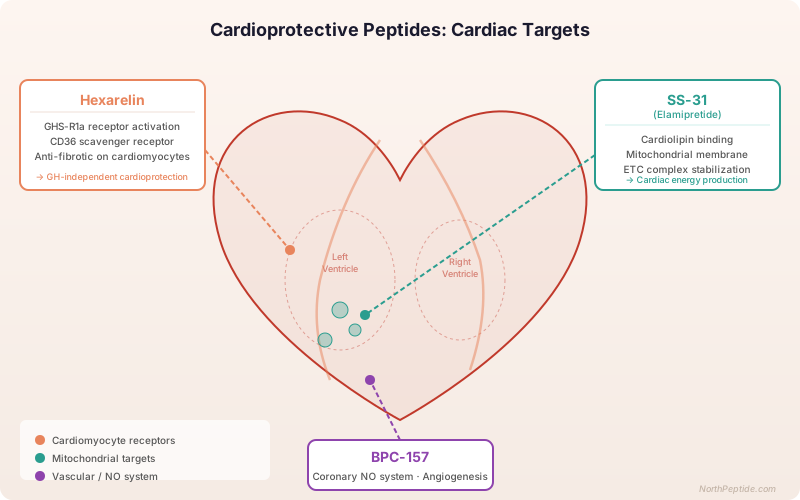
Hexarelin: Growth Hormone Secretagogue with Independent Cardiac Action
Hexarelin (His-D-2-Me-Trp-Ala-Trp-D-Phe-Lys-NH2) is a synthetic hexapeptide growth hormone secretagogue (GHS) that has attracted research interest for cardiovascular effects that appear to be independent of growth hormone release. While most GHS compounds are studied primarily for their endocrine effects, Hexarelin occupies a unique position because its cardiac actions are mediated through a separate receptor system.
Dual Receptor Mechanism
Mao et al. (2014) provided a comprehensive review of Hexarelin's cardiovascular action, demonstrating that the peptide exerts cardiac effects through two distinct receptors:
GHS-R1a (Ghrelin Receptor): The classical growth hormone secretagogue receptor, which is expressed not only in the hypothalamus and pituitary but also in cardiomyocytes and blood vessel endothelium. Activation of cardiac GHS-R1a by Hexarelin has been shown to produce a positive inotropic effect on ischemic cardiomyocytes and to protect them from ischemia-reperfusion injury by inhibiting apoptosis and promoting cell survival.
CD36 (Scavenger Receptor): Demers et al. (2004) identified CD36 as a specific cardiac receptor for Hexarelin through photoaffinity cross-linking studies, pinpointing residues Asn132-Met169 as the binding domain. CD36 is a multifunctional glycoprotein expressed on cardiomyocytes, macrophages, and endothelial cells. The Hexarelin-CD36 interaction mediates cardioprotective effects that are entirely independent of GH release — making Hexarelin conceptually different from other GHS compounds in cardiac research.
Preclinical Evidence
McDonald et al. (2018) demonstrated that Hexarelin treatment preserves myocardial function and reduces cardiac fibrosis in a mouse model of acute myocardial infarction. After 14 days of treatment, mice receiving Hexarelin displayed significant improvement in left ventricular function compared to vehicle-treated controls. The study also showed reduced collagen deposition and fibrotic remodeling, suggesting that Hexarelin's effects extend beyond acute ischemic protection to influence post-infarction cardiac remodeling.
Earlier research documented that chronic Hexarelin administration alleviates left ventricular dysfunction, pathological remodeling, and cardiac cachexia in rats with congestive heart failure. The proposed mechanism involves suppression of stress-induced neurohormonal activation — specifically reducing elevated catecholamine and cortisol levels — combined with direct anti-apoptotic effects on cardiomyocytes.
The GH-Independent Question
A critical research insight is that Hexarelin's cardioprotective effects persist even when the GH-releasing component is blocked or absent. This suggests that the CD36-mediated pathway provides cardiac protection through mechanisms related to fatty acid metabolism, oxidized LDL handling, and anti-inflammatory signaling rather than through GH/IGF-1 axis activation. This GH-independent cardiac action distinguishes Hexarelin from other secretagogues like GHRP-2 or GHRP-6, whose cardiac effects are less well-characterized through non-GH pathways. For a broader comparison of GHS compounds, see our growth hormone secretagogues comparison guide.
NorthPeptide offers research-grade BPC-157. View details →
SS-31 (Elamipretide): Protecting the Heart from Within the Mitochondria
SS-31 (D-Arg-Dmt-Lys-Phe-NH2, also known as Elamipretide, MTP-131, or Bendavia) represents an entirely different approach to cardioprotection. Rather than acting at cell surface receptors, SS-31 targets the inner mitochondrial membrane, where it stabilizes the lipid cardiolipin — a critical component of cristae structure and electron transport chain function.
The Cardiolipin Connection
Cardiolipin is a unique phospholipid found almost exclusively in the inner mitochondrial membrane, where it serves as a structural scaffold for respiratory chain supercomplexes and plays an essential role in ATP production. Tung et al. (2025) reviewed the evidence that SS-31 selectively binds to cardiolipin through electrostatic and hydrophobic interactions, stabilizing cristae architecture and preserving electron transport chain coupling.
During cardiac ischemia-reperfusion injury, disruption of cardiolipin content and composition impairs mitochondrial function, triggers excessive reactive oxygen species (ROS) production, and initiates apoptotic cascades that lead to cardiomyocyte death. SS-31's mechanism of action directly addresses this pathology by maintaining cardiolipin integrity during the ischemic insult.
Ischemia-Reperfusion Protection
Research published in Communications Biology demonstrated that elamipretide mitigates fragmentation of cristae networks following cardiac ischemia-reperfusion in rats. Using serial block face scanning electron microscopy, researchers showed that disease-induced fragmentation of cristae networks was significantly improved with elamipretide treatment. Respirometry with permeabilized ventricular fibers confirmed that ischemia-reperfusion induced decrements in the activity of complexes I, II, and IV were alleviated with elamipretide.
Chavez et al. (2020) mapped the mitochondrial protein interaction landscape of SS-31 using chemical cross-linking and mass spectrometry, identifying direct interactions with components of the electron transport chain and ATP synthase. This work provided mechanistic insight showing that SS-31 aggregates cardiolipin and improves mitochondrial membrane structure and bioenergetic function — importantly, without preventing the acute decrease in cardiolipin content that occurs during reperfusion.
Age-Related Cardiac Dysfunction
Chiao et al. (2020) demonstrated that late-life restoration of mitochondrial function with SS-31 reverses cardiac dysfunction in old mice. Eight weeks of SS-31 treatment in aged mice restored cardiac function to levels seen in young animals, suggesting that age-related cardiac decline driven by mitochondrial dysfunction may be at least partially reversible. This finding has profound implications for aging research and has contributed to ongoing clinical trials of elamipretide in heart failure populations.
For a broader discussion of mitochondrial peptide research, see our article on mitochondrial peptides: SS-31, MOTS-c, and the energy connection.
BPC-157: Vascular Protection Through the NO System
BPC-157 (Body Protection Compound-157) is best known for its gastrointestinal cytoprotective and wound healing properties, but a substantial body of preclinical research has explored its effects on the cardiovascular system through vascular endothelial modulation.
The Angiogenesis-NO Axis
BPC-157's cardiovascular relevance centers on its dual modulation of angiogenesis and nitric oxide (NO) signaling. Hsieh et al. (2020) demonstrated that BPC-157 activates two distinct pathways leading to endothelial NO production:
VEGF-Dependent Pathway: BPC-157 promotes angiogenesis through VEGFR2 activation, triggering the PI3K-Akt-eNOS signaling cascade. This pathway drives new blood vessel formation and endothelial cell survival, which is critical for tissue perfusion after ischemic injury.
VEGF-Independent Pathway: BPC-157 also activates the Src-Caveolin-1-eNOS pathway, providing an alternative route to NO production independent of VEGF signaling. Hsieh et al. confirmed the upstream role of Src by showing that pretreatment with a Src inhibitor abolished the enhanced phosphorylation of Src, Caveolin-1, and eNOS.
Vasomotor Modulation
The same group demonstrated that BPC-157's vasodilation effect is nitric oxide-mediated, as the addition of L-NAME (a competitive NOS inhibitor) or hemoglobin (an NO scavenger) abolished vasodilation of aortic tissue. BPC-157 has been characterized as among the most potent angiomodulatory agents studied, acting through multiple vasoactive pathways including NO, VEGF, and FAK (focal adhesion kinase) systems.
Ischemic Tissue Rescue
In models of hindlimb ischemia, BPC-157 accelerated the recovery of blood flow in ischemic muscle as detected by laser Doppler scanning, indicating functional promotion of angiogenesis rather than merely in vitro observations. Seiwerth et al. (2021) reviewed how this vascular protective capacity extends across multiple tissue contexts, with the NO-modulating mechanism proposed as a common thread linking BPC-157's apparently diverse cytoprotective effects.
The cardiovascular implications of BPC-157's vascular effects remain an active area of investigation. While the peptide has not been specifically studied as a cardiac therapeutic in the same way as Hexarelin or SS-31, its ability to promote angiogenesis, modulate vasomotor tone, and protect endothelial function positions it as a compound of interest in cardiovascular research contexts. For more on BPC-157's broader effects, see our BPC-157 research guide.
Cardiogen: Bioregulator Peptide Targeting Cardiac Gene Expression
Cardiogen (H-Ala-Glu-Asp-Arg-OH, also called AEDR) is a synthetic tetrapeptide developed within the Khavinson bioregulator framework — the same research program that produced Epithalon, Pinealon, Cortagen, and other tissue-specific short peptides. Unlike the other compounds in this review, Cardiogen operates at the level of gene expression rather than receptor signaling or mitochondrial function.
The Bioregulator Hypothesis
Khavinson et al. (2021) systematically reviewed the evidence that short peptides of 2-7 amino acid residues can penetrate cell nuclei and interact directly with DNA, histones, and nucleosomal structures. This proposed mechanism — peptide-mediated gene regulation — differs fundamentally from conventional receptor-ligand pharmacology. For Cardiogen specifically, the tetrapeptide sequence Ala-Glu-Asp-Arg is proposed to interact with cardiac-specific gene regulatory regions.
Effects on Cardiac Cell Biology
In vitro studies of Cardiogen have reported several effects on cardiac cell cultures:
Cytoskeletal Protein Upregulation: Cardiogen incubation increased expression of actin, vimentin, and tubulin up to five-fold in treated cardiac cells, while nuclear matrix proteins lamin A and lamin C showed up to 2.5-fold increases. These structural proteins are essential for cardiomyocyte integrity and contractile function.
Anti-Apoptotic Effects: Cardiogen has been observed to suppress apoptosis in myocardial cells, presumably through lowering p53 protein expression. If confirmed, this mechanism could contribute to cardiomyocyte survival under stress conditions such as ischemia or toxic injury.
Progenitor Cell Stimulation: Preliminary observations suggest that Cardiogen may stimulate the proliferation of cardiac progenitor cells, potentially contributing to myocardial regeneration — a concept that challenges the traditional view of the heart as a post-mitotic organ with limited regenerative capacity.
Research Limitations
It is important to note that the bioregulator peptide field remains predominantly preclinical, with most studies originating from Russian research institutions. The proposed mechanism of direct DNA interaction by short peptides, while supported by molecular modeling and some experimental data, has not been independently replicated at scale by Western research groups. Researchers approaching Cardiogen should maintain appropriate scientific skepticism while recognizing the intriguing preclinical signals. For more on the broader bioregulator concept, see our guide on what are bioregulator peptides.
VIP (Vasoactive Intestinal Peptide): Coronary Vasodilation and Beyond
VIP (Vasoactive Intestinal Peptide) is a 28-amino acid neuropeptide that functions as one of the most potent endogenous vasodilators known. Originally identified in the gastrointestinal tract (hence the name), VIP is now recognized as a widely distributed neuropeptide with significant cardiovascular effects mediated through VPAC1 and VPAC2 receptors.
Coronary Vasodilation
Research has consistently demonstrated that VIP is an extraordinarily potent coronary vasodilator. On a molar basis, VIP is 50-100 times more potent than acetylcholine as a vasodilator. When administered into the coronary artery or intravenously, VIP increases epicardial coronary artery cross-sectional area, decreases coronary vascular resistance, and significantly increases coronary artery blood flow.
The mechanism involves VPAC2 receptor activation and subsequent engagement of adenylyl cyclase, increasing intracellular cyclic AMP (cAMP). Selective VPAC1 and VPAC2 receptor activation in the coronary circulation produces vasodilation, with the VIP-elicited coronary vasodilation involving activation of VPAC2 receptors and KATP channels.
Cardioprotection Through NO Coordination
An important study by Kalfin et al. (1998) demonstrated that VIP and nitric oxide play coordinated roles in cardioprotection. The beneficial effects of VIP were reduced by inhibition of NO synthesis, and conversely, the cardioprotective effects of NO were reduced by VIP receptor antagonism. This suggests that VIP and NO function as integrated partners in a cardioprotective network rather than as redundant systems.
Pulmonary Hypertension Research
Petkov et al. (2003) published a landmark study demonstrating VIP as a potential new drug for treatment of primary pulmonary hypertension. In patients with pulmonary arterial hypertension, VIP inhalation produced significant improvements in pulmonary hemodynamics without systemic hypotension — suggesting that targeted pulmonary delivery of VIP could selectively address pulmonary vascular pathology.
Cardiac Contractility and Rhythm
Beyond vasodilation, VIP exerts direct effects on cardiac function. The presence and significant cardiovascular effects of VIP in the heart suggest that the peptide is important in the regulation of coronary blood flow, cardiac contraction, and heart rate. VIP-containing nerve fibers have been identified in the cardiac conduction system, suggesting a role in rhythm regulation.
Comparing Cardioprotective Mechanisms
The five peptides reviewed here approach cardiac protection from fundamentally different biological angles. This mechanistic diversity is one of the most interesting aspects of cardioprotective peptide research, as it suggests multiple independent pathways for cardiac protection that could theoretically complement each other.
| Peptide | Primary Target | Mechanism | Key Evidence | Research Stage |
|---|---|---|---|---|
| Hexarelin | GHS-R1a + CD36 receptors | Anti-apoptotic signaling, anti-fibrotic remodeling, GH-independent cardiac action | Mouse MI model: preserved LV function, reduced fibrosis | Extensive preclinical |
| SS-31 | Cardiolipin (inner mitochondrial membrane) | Cristae stabilization, ETC coupling preservation, ROS reduction | Rat IR model: restored Complex I/II/IV activity, cristae preservation | Clinical trials (heart failure) |
| BPC-157 | VEGFR2, Src-Cav1-eNOS pathway | Angiogenesis promotion, NO-mediated vasodilation, endothelial protection | Hindlimb ischemia: accelerated blood flow recovery | Extensive preclinical |
| Cardiogen | Nuclear DNA/histones (proposed) | Cardiac gene upregulation, cytoskeletal protein increase, anti-apoptosis | In vitro: 5-fold actin/vimentin increase, p53 suppression | Early preclinical |
| VIP | VPAC1/VPAC2 receptors | cAMP-mediated vasodilation, NO coordination, coronary flow increase | Human: 50-100x more potent than ACh as vasodilator | Clinical data available |
Mechanistic Convergence: The NO Connection
A recurring theme across multiple cardioprotective peptides is the involvement of nitric oxide signaling. BPC-157 directly activates eNOS through both VEGF-dependent and VEGF-independent pathways. VIP's cardioprotective effects are coordinated with NO production. Hexarelin's endothelial effects may involve NO-mediated vasodilation. Even SS-31's mitochondrial protection has downstream effects on ROS production that influence NO bioavailability.
This convergence on NO signaling is not coincidental. Nitric oxide serves as a master regulator of cardiovascular homeostasis — controlling vasomotor tone, inhibiting platelet aggregation, suppressing leukocyte adhesion, and modulating cardiomyocyte contractility. Peptides that enhance or protect NO bioavailability, through whatever primary mechanism, are likely to show downstream cardiovascular benefits.
Research Gaps and Future Directions
Several significant gaps remain in cardioprotective peptide research:
Head-to-head comparisons: No published studies have directly compared the cardioprotective efficacy of these peptides in the same experimental model. Such comparisons would be invaluable for understanding relative potency and identifying which mechanisms are most protective in specific cardiac pathologies.
Combination studies: Given the mechanistic diversity described above — receptor-level action (Hexarelin), mitochondrial stabilization (SS-31), vascular modulation (BPC-157, VIP), and gene regulation (Cardiogen) — the potential for synergistic combinations has not been explored. Research on multi-peptide protocols in cardiac models could reveal additive or synergistic protection. For more on the rationale for combining peptides, see our article on why researchers combine peptides.
Translational data: SS-31 and VIP have the most advanced clinical data, while Hexarelin, BPC-157, and Cardiogen remain predominantly preclinical. The gap between promising animal data and human clinical validation remains the field's primary challenge.
Long-term safety: Chronic dosing studies in cardiac models are limited for most of these peptides. Understanding the long-term effects of sustained peptide-mediated cardioprotection — including potential desensitization, compensatory responses, or off-target effects — is essential for any translational pathway.
Biomarker development: Identifying reliable biomarkers for peptide-mediated cardioprotection would allow researchers to monitor protective effects in real-time and optimize dosing protocols.
Implications for Cardiovascular Research
The diversity of cardioprotective mechanisms among research peptides offers several opportunities for cardiovascular investigators:
Target validation: Each peptide provides a pharmacological tool for probing specific cardioprotective pathways. SS-31 allows investigation of mitochondrial contributions to cardiac disease. Hexarelin enables study of CD36-mediated cardiac signaling. BPC-157 permits exploration of angiogenesis-NO crosstalk in cardiac recovery.
Disease model selection: The mechanism of action should guide model selection. SS-31 is most relevant in ischemia-reperfusion and aging models where mitochondrial dysfunction is central. Hexarelin is appropriate for post-MI remodeling studies. VIP is suited for pulmonary hypertension and coronary flow research. BPC-157 may be most informative in models involving vascular injury or endothelial dysfunction.
Mechanistic overlap: The NO convergence described above suggests that researchers studying cardioprotection should routinely measure NO-related endpoints (eNOS expression, nitrite/nitrate levels, NO-dependent vasodilation) regardless of which peptide is being investigated, to capture this shared downstream mechanism.
Products mentioned in this article:
Summary of Key Research References
| Study | Year | Type | Focus | Reference |
|---|---|---|---|---|
| Mao et al. | 2014 | Review | Cardiovascular action of Hexarelin | PMC4178518 |
| Demers et al. | 2004 | Experimental | Hexarelin CD36 binding site identification | PMC1133797 |
| McDonald et al. | 2018 | Preclinical | Hexarelin in acute myocardial infarction model | PMC5949285 |
| Tung et al. | 2025 | Review | Elamipretide structure, mechanism, and therapeutic potential | PMC11816484 |
| Chavez et al. | 2020 | Experimental | SS-31 mitochondrial protein interaction landscape | PMC7334473 |
| Chiao et al. | 2020 | Preclinical | SS-31 reversal of cardiac dysfunction in aged mice | PMC7377906 |
| Hsieh et al. | 2020 | Experimental | BPC-157 Src-Caveolin-1-eNOS pathway activation | PMC7555539 |
| Seiwerth et al. | 2021 | Review | BPC-157 wound healing and vascular effects | PMC8275860 |
| Khavinson et al. | 2021 | Systematic Review | Peptide regulation of gene expression | PMC8619776 |
| Petkov et al. | 2003 | Clinical | VIP for primary pulmonary hypertension | PMC154449 |
Written by NorthPeptide Research Team
Ready to explore research-grade peptides?
Research Disclaimer
For laboratory and research use only. Not for human consumption.
This article is intended solely as a summary of published scientific research. It does not constitute medical advice, treatment recommendations, or an endorsement for any therapeutic purpose. The research discussed herein is predominantly preclinical, and results may not translate to human outcomes. Researchers should consult relevant institutional review boards and regulatory guidelines before designing studies involving these compounds.
NorthPeptide supplies research-grade peptides for legitimate scientific investigation. All products are sold strictly for laboratory and research purposes.