Wound Healing Peptides: BPC-157, TB-500, GHK-Cu, and LL-37 in Tissue Repair Research
Written by NorthPeptide Research Team | Reviewed March 8, 2026
Introduction: The Biology of Wound Repair and Peptide Research
Wound healing is among the most complex biological processes in mammalian physiology, involving coordinated cascades of inflammation, cell proliferation, extracellular matrix deposition, angiogenesis, and tissue remodeling. When any phase of this orchestrated sequence falters, the result can range from chronic non-healing wounds to excessive scarring. For researchers investigating novel approaches to tissue repair, peptides have emerged as compelling subjects of study — small enough to penetrate tissues efficiently, yet structurally sophisticated enough to interact with specific biological pathways.
Four peptides have attracted particular research interest for their distinct and potentially complementary roles in wound healing: BPC-157, which has been investigated for its pro-angiogenic properties; TB-500 (a synthetic fragment of Thymosin Beta-4), studied for its role in cytoskeletal regulation and cell migration; GHK-Cu, a copper-binding tripeptide researched for collagen remodeling and gene expression modulation; and LL-37, the only human cathelicidin antimicrobial peptide, investigated for wound defense and immunomodulation.
This research guide examines the preclinical evidence behind each peptide’s wound healing mechanisms, compares their biological targets, and explores how their distinct activities map to different phases of the tissue repair process.
NorthPeptide offers research-grade Glow Blend (BPC-157 / TB-500 / GHK-Cu). View details →
The Four Phases of Wound Healing
Before examining individual peptides, it is important to understand the four overlapping phases that characterize normal wound repair:
- Hemostasis (seconds to hours): Platelet aggregation, fibrin clot formation, and the release of growth factors that initiate the healing cascade.
- Inflammation (hours to days): Neutrophils and macrophages clear debris and pathogens. Pro-inflammatory cytokines recruit additional immune cells. This phase must resolve properly for healing to progress.
- Proliferation (days to weeks): Fibroblasts synthesize collagen and extracellular matrix components. Endothelial cells form new blood vessels (angiogenesis). Keratinocytes migrate across the wound bed (re-epithelialization).
- Remodeling (weeks to months): Collagen is reorganized from type III to type I. Matrix metalloproteinases (MMPs) balance collagen synthesis and degradation. Wound tensile strength gradually increases, typically reaching 70-80% of original tissue strength.
Each of the four peptides discussed in this guide has been researched for activity in one or more of these phases, with distinct mechanisms that target different cellular and molecular processes.
BPC-157: Pro-Angiogenic Mechanisms in Tissue Repair
Origin and Structure
BPC-157 (Body Protection Compound-157) is a synthetic pentadecapeptide derived from a protective protein found in human gastric juice. Its amino acid sequence — Gly-Glu-Pro-Pro-Pro-Gly-Lys-Pro-Ala-Asp-Asp-Ala-Gly-Leu-Val — does not correspond to any known naturally occurring peptide in its full sequence, though it is derived from a larger gastric protein.
Angiogenesis Research
The most extensively documented mechanism of BPC-157 in wound healing research involves its pro-angiogenic activity. Multiple preclinical studies have demonstrated that BPC-157 promotes the formation of new blood vessels through activation of the VEGFR2-Akt-eNOS signaling pathway. Research published in Life Sciences showed that BPC-157’s therapeutic potential is associated with VEGFR2 activation and upregulation, with the peptide stimulating VEGF protein and gene expression while upregulating phosphorylation of ERK1/2 and downstream transcription factors including c-Fos, c-Jun, and Egr-1.
In an alkali-burn wound model, BPC-157 significantly improved wound healing activity and was shown to promote proliferation, migration, and angiogenesis in vitro. The peptide also upregulated the expression of VEGF in treated tissues, providing a mechanistic link between BPC-157 administration and the observed acceleration of new blood vessel formation.
Tendon and Musculoskeletal Healing
BPC-157 has been studied across a range of musculoskeletal injury models. A systematic review of 36 preclinical studies published from 1993 to 2024 found that BPC-157 promoted healing in muscle, tendon, ligament, and bone injury models, primarily by boosting growth factors and reducing inflammation. The peptide has been shown to increase growth hormone receptor (GHR) expression in tendon fibroblasts at both mRNA and protein levels, and treated animals demonstrated abundant, well-oriented collagen type I fibers at injury sites.
Nitric Oxide System
BPC-157 modulates the nitric oxide (NO) system through both VEGF-dependent (via VEGFR2-PI3K-Akt-eNOS) and VEGF-independent (via Src-caveolin-1-eNOS) pathways. This dual mechanism supports angiogenesis, vasodilation, and vascular stability, contributing to the peptide’s broad tissue-protective effects observed in preclinical models.
Explore the full research profile: BPC-157 Research Guide
TB-500: Actin Regulation and Cell Migration
Origin and Relationship to Thymosin Beta-4
TB-500 is a synthetic peptide based on the active region of Thymosin Beta-4 (Tβ4), a 43-amino acid protein that is present in virtually all nucleated cells. Tβ4 is the primary intracellular G-actin sequestering peptide, and its role in wound healing research centers on its ability to regulate the actin cytoskeleton — the structural framework that drives cell shape, movement, and division.
The peptide segment 17LKKTETQ23 represents the active site within Tβ4 responsible for actin binding, cell migration, and wound healing. TB-500 contains this active region, enabling it to replicate key biological activities of the parent protein.
Cell Migration Research
The central mechanism through which Tβ4/TB-500 promotes wound healing involves the regulation of cell migration. By sequestering G-actin monomers, the peptide modulates actin polymerization dynamics, which in turn influences the formation of lamellipodia — the leading-edge structures that cells use to crawl across wound surfaces. Research has demonstrated that Tβ4 promotes migration via upregulation of zyxin expression, a protein that regulates the actin cytoskeleton and coordinates between the cytoskeleton and focal adhesion sites.
In dermal wound models, topical or intraperitoneal administration of Tβ4 increased re-epithelialization by 42% over saline controls at 4 days and by as much as 61% at 7 days post-wounding. Treated wounds also contracted at least 11% more than controls by day 7, suggesting accelerated wound closure through enhanced keratinocyte and fibroblast migration.
Cardiac Repair
Beyond skin and soft tissue, Tβ4 has been investigated in cardiac repair research. The peptide has been shown to promote myocardial survival under hypoxic conditions, induce epicardium-derived neovascularization in the adult heart, and activate endogenous cardiac progenitors. In mouse models of myocardial infarction, Tβ4 enhanced myocyte survival and improved cardiac function, while also extending the regenerative window of neonatal mouse hearts from postnatal day 1 to day 7.
Anti-Inflammatory Properties
In corneal research, Tβ4 has demonstrated both wound healing and anti-inflammatory properties, including suppression of apoptosis. These dual functions — promoting migration while dampening excessive inflammation — position TB-500 as a peptide of interest for research into tissues where inflammation-driven damage complicates the repair process.
Explore the full research profile: TB-500 Research Guide
GHK-Cu: Collagen Remodeling and Gene Expression
Discovery and Copper Complex
GHK-Cu (glycyl-L-histidyl-L-lysine copper complex) was first identified by Loren Pickart in 1973 when he observed that liver tissue from young donors contained a factor that could modulate the behavior of aged fibroblasts. This factor was subsequently identified as a tripeptide with a strong affinity for copper(II) ions. The copper complex is essential for biological activity — the peptide functions as a delivery vehicle for copper to tissues where it participates in enzymatic reactions critical for collagen cross-linking and extracellular matrix integrity.
Collagen and Matrix Remodeling
GHK-Cu occupies a unique position among wound healing peptides because it simultaneously stimulates both synthesis and breakdown of collagen and glycosaminoglycans. It modulates the activity of matrix metalloproteinases (MMPs) and their inhibitors (TIMPs), enabling the controlled remodeling that distinguishes organized repair from disordered scarring. Additionally, GHK-Cu stimulates the synthesis of collagen, elastin, decorin, and glycosaminoglycans — the structural components of the extracellular matrix.
Gene Expression Modulation
Perhaps the most remarkable finding in GHK-Cu research came from analysis using the Broad Institute’s Connectivity Map (CMap) database. This analysis revealed that GHK is capable of modulating the expression of approximately 4,000 human genes — roughly 32% of the human genome. Gene expression changes included upregulation of genes involved in antioxidant defense, DNA repair, proteasome function, and anti-inflammatory pathways, alongside downregulation of genes associated with inflammation and tissue destruction.
A 2017 study specifically examined GHK’s effects on gene expression relevant to nervous system function and cognitive decline, finding significant modulation of genes involved in neuronal development, axon guidance, and synaptic plasticity. This broad gene-regulatory capacity distinguishes GHK-Cu from other wound healing peptides, which tend to operate through more targeted receptor-mediated mechanisms.
Angiogenic Properties
GHK-Cu is a potent attractant for capillary endothelial cells at low concentrations, contributing to angiogenesis through a complementary mechanism to BPC-157. It also stimulates macrophage migration and mast cell recruitment, supporting the clearance of damaged cellular debris and secretion of proteins important for wound contraction.
Explore the full research profile: GHK-Cu Research Guide
LL-37: Antimicrobial Defense and Immunomodulation
The Only Human Cathelicidin
LL-37 is the sole cathelicidin antimicrobial peptide produced in humans. It is a 37-amino acid peptide cleaved from its precursor protein hCAP-18 (human cationic antimicrobial protein 18 kDa) and is expressed by neutrophils, epithelial cells, macrophages, and other immune cells. Its name derives from its two N-terminal leucine residues and its 37-residue length.
Direct Antimicrobial Activity
LL-37 kills bacteria through a mechanism fundamentally different from conventional antibiotics. As a cationic, amphiphilic peptide, LL-37 disrupts microbial membranes through electrostatic attraction to the negatively charged phospholipids that characterize bacterial cell surfaces. This membrane-disruption mechanism makes it difficult for bacteria to develop resistance, as it would require fundamental restructuring of the cell membrane — a far more costly evolutionary adaptation than the enzymatic modifications that confer resistance to conventional antibiotics.
Research has demonstrated that LL-37 has both antimicrobial and anti-biofilm properties and can eradicate preformed biofilms in vitro. This is particularly significant for chronic wound research, as biofilm formation by organisms such as Staphylococcus aureus and Pseudomonas aeruginosa is a major barrier to healing in clinical wound management.
Wound Healing Beyond Antimicrobial Defense
LL-37’s wound healing activity extends well beyond pathogen clearance. By in vivo adenoviral transfer of the antimicrobial peptide to excisional wounds in ob/ob mice, LL-37 significantly improved re-epithelialization and granulation tissue formation. The peptide modulates neutrophil function, influences cytokine release, and promotes the migration and proliferation of keratinocytes and endothelial cells.
Clinical Translation
LL-37, under the clinical name ropocamptide, has been tested in clinical trials for the treatment of hard-to-heal venous leg ulcers. The trial demonstrated that LL-37 is safe and well tolerated when applied locally to non-healing lower leg ulcers alongside standard compression therapy. This represents one of the most advanced clinical development programs among the wound healing peptides discussed in this guide.
LL-37 also plays a role in inflammatory skin conditions. It is actively involved in the pathophysiology of psoriasis and rosacea, where overexpression or aberrant processing contributes to disease pathology — a reminder that the balance of antimicrobial peptide expression is critical for tissue homeostasis.
Explore the full research profile: LL-37 Research Guide
Comparative Analysis: Mechanisms, Tissues, and Research Routes
The following table summarizes the key differences and complementary mechanisms of the four wound healing peptides:
| Feature | BPC-157 | TB-500 | GHK-Cu | LL-37 |
|---|---|---|---|---|
| Primary Mechanism | Angiogenesis (VEGFR2 activation) | Actin sequestration / cell migration | Collagen remodeling / gene modulation | Membrane disruption / immunomodulation |
| Key Signaling | VEGFR2-Akt-eNOS, ERK1/2 | Zyxin upregulation, FAK signaling | MMP/TIMP balance, CMap gene networks | TLR signaling, NF-kB modulation |
| Healing Phase Emphasis | Proliferation (angiogenesis) | Proliferation (migration) | Remodeling (matrix reorganization) | Inflammation (pathogen defense) |
| Tissues Studied | GI tract, tendon, muscle, ligament, bone, skin | Skin, cornea, heart, muscle, nerve | Skin, lung, bone, GI, nervous system | Skin, cornea, GI, respiratory mucosa |
| Anti-inflammatory | Yes (cytokine modulation) | Yes (apoptosis suppression) | Yes (gene expression) | Complex (pro- and anti-inflammatory) |
| Research Routes | IP, SC, oral, topical | IP, SC, topical | Topical, SC, IP | Topical, IV (clinical trials) |
| Molecular Weight | ~1,419 Da (15 aa) | ~4,921 Da (43 aa for Tβ4) | ~403 Da (tripeptide + Cu) | ~4,493 Da (37 aa) |
| Clinical Stage | Preclinical (3 pilot human studies) | Preclinical | OTC topical (cosmetic); preclinical (systemic) | Phase II clinical trials (ropocamptide) |
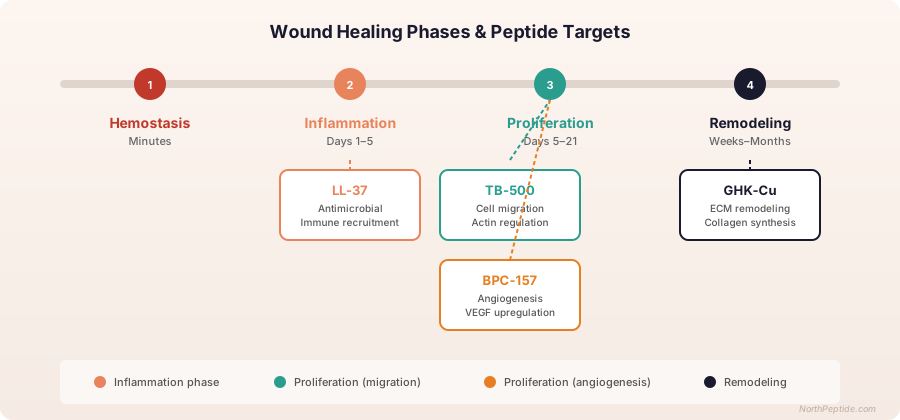
Complementary Mechanisms: Phase Coverage in Wound Repair
One of the most intriguing aspects of these four peptides from a research perspective is how their mechanisms map to different — and largely non-overlapping — phases and processes of wound healing:
- LL-37 addresses the earliest challenge: preventing infection and modulating the inflammatory response so that it resolves appropriately rather than becoming chronic.
- TB-500 drives the cellular migration that is essential for wound closure — moving keratinocytes across the wound bed and fibroblasts into the wound matrix.
- BPC-157 establishes the vascular infrastructure (angiogenesis) needed to deliver oxygen and nutrients to regenerating tissue.
- GHK-Cu orchestrates the remodeling phase, balancing collagen synthesis and degradation while modulating thousands of genes involved in tissue repair and homeostasis.
This phase-specific activity profile has generated research interest in multi-peptide approaches. NorthPeptide’s Glow Blend (BPC-157, TB-500, GHK-Cu) and Klow Blend (BPC-157, TB-500, GHK-Cu, KPV) represent formulations designed for researchers investigating these complementary mechanisms. For detailed analysis of the BPC-157 and TB-500 combination specifically, see the BPC-157 + TB-500 Blend Research Guide.
Research Considerations and Limitations
Preclinical vs. Clinical Evidence
It is critical to note that the vast majority of evidence for these peptides comes from in vitro cell culture studies and in vivo animal models. The translation from preclinical models to human outcomes is uncertain for several reasons:
- Species differences: Rodent wound healing differs significantly from human wound healing — mice heal primarily by contraction rather than re-epithelialization.
- Wound model limitations: Standardized surgical wounds in healthy young animals do not replicate the complexity of chronic, infected, or comorbidity-associated wounds in humans.
- Dose translation: Allometric scaling from rodent to human doses is not straightforward, and optimal dosing for systemic versus local administration remains undefined for most peptides.
- Combination effects: While the complementary mechanisms are theoretically appealing, few studies have directly tested multi-peptide combinations in controlled wound healing models.
Stability and Delivery
Each peptide presents unique stability and delivery challenges. BPC-157 is notably stable in gastric conditions (as a gastric-origin peptide), while TB-500 and LL-37 are susceptible to proteolytic degradation. GHK-Cu’s copper complex adds formulation considerations, as the Cu(II) ion must remain chelated for biological activity but available for enzymatic transfer at the target site.
Regulatory Status
None of these peptides are approved as drugs for wound healing in any major regulatory jurisdiction. LL-37 (as ropocamptide) has the most advanced clinical development program, while GHK-Cu is widely available in topical cosmetic formulations. BPC-157 and TB-500 remain research-use compounds without regulatory approval for therapeutic applications.
Summary of Key Research References
| Study | Year | Type | Focus | Reference |
|---|---|---|---|---|
| Hsieh et al. | 2017 | In vitro/In vivo | BPC-157 VEGFR2 activation and angiogenesis | PMC4425239 |
| Chang et al. | 2014 | Systematic Review | BPC-157 musculoskeletal healing (36 studies) | PMC12446177 |
| Sikiric et al. | 2018 | Review | BPC-157 angiogenic growth factors and tissue healing | PMC6271067 |
| Malinda et al. | 1999 | In vivo | Thymosin beta-4 accelerates dermal wound healing | PubMed 10469335 |
| Sosne et al. | 2007 | Review | Thymosin beta-4 corneal wound healing and anti-inflammatory | PMC2701135 |
| Smart et al. | 2011 | Review | Thymosin beta-4 cardiac repair and regeneration | PMC4084412 |
| Pickart et al. | 2015 | Review | GHK peptide skin regeneration and cellular pathways | PMC4508379 |
| Pickart et al. | 2014 | Gene analysis | GHK and DNA: resetting the human genome | PMC4180391 |
| Pickart et al. | 2018 | Review | GHK-Cu regenerative and protective actions | PMC6073405 |
| Mangoni et al. | 2016 | Review | LL-37 antimicrobial peptide in inflammatory skin disease | PMC3346901 |
| Duplantier & van Hoek | 2013 | In vitro/In vivo | LL-37 treatment for polymicrobial infected wounds | PMC3699762 |
| Ramos et al. | 2021 | In vivo | LL-37 efficacy in MRSA wound infection model | PMC8532939 |
Written by NorthPeptide Research Team
Ready to explore research-grade peptides?
Research Disclaimer
For laboratory and research use only. Not for human consumption.
This article is intended solely as a summary of published scientific research. It does not constitute medical advice, treatment recommendations, or an endorsement for any therapeutic purpose. The research discussed herein is predominantly preclinical, and results may not translate to human outcomes. Researchers should consult relevant institutional review boards and regulatory guidelines before designing studies involving these compounds.
NorthPeptide supplies research-grade peptides for legitimate scientific investigation. All products are sold strictly for laboratory and research purposes.