
Neuroprotective Peptides: From Cerebrolysin to Cortagen — Research Frontiers
Written by NorthPeptide Research Team | Reviewed March 9, 2026
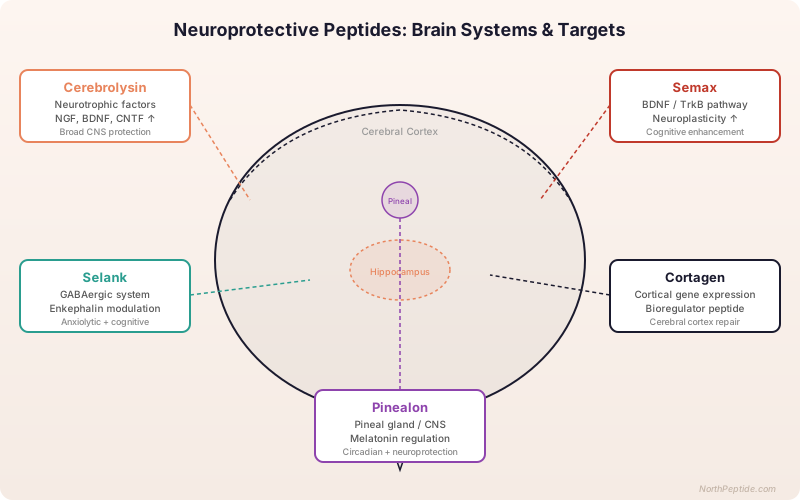
Introduction: The Blood-Brain Barrier and the Neuroprotection Challenge
The brain presents one of the most formidable challenges in peptide research: the blood-brain barrier (BBB). This selective interface between the bloodstream and central nervous system, composed of tightly connected endothelial cells, pericytes, and astrocyte end-feet, evolved to protect neural tissue from circulating toxins and pathogens. But this same barrier that safeguards the brain also hinders the delivery of therapeutic molecules, particularly large peptides and proteins that cannot passively diffuse across the endothelium.
Despite this challenge, several peptides have demonstrated the ability to influence central nervous system function — some by crossing the BBB directly, others through intranasal delivery that bypasses it, and still others through peripheral signaling that modulates brain activity indirectly. The field of neuroprotective peptide research spans compounds derived from neurotrophic factors, immunomodulatory sequences, bioregulatory tetrapeptides, and ion channel modulators.
This research guide examines seven peptides at the frontier of neuroprotection research: Cerebrolysin, Selank, Semax, Cortagen, PE-22-28, and P21. Each approaches neuroprotection through a distinct mechanism, and together they illustrate the breadth of strategies researchers are pursuing to protect and restore neural function.
NorthPeptide offers research-grade Selank. View details →
Cerebrolysin: Neurotrophic Factor Mimicry
Composition and Origin
Cerebrolysin is not a single peptide but a standardized mixture of low-molecular-weight peptides and free amino acids derived from porcine brain tissue through controlled enzymatic proteolysis. The resulting mixture contains peptide fragments that structurally and functionally mimic endogenous neurotrophic factors, particularly brain-derived neurotrophic factor (BDNF) and glial cell-derived neurotrophic factor (GDNF).
This compositional complexity distinguishes Cerebrolysin from the other peptides in this guide. Rather than a defined sequence with a specific receptor target, Cerebrolysin acts as a multi-component neurotrophic cocktail — an approach that has both advantages (broad-spectrum activity) and disadvantages (difficulty in defining precise mechanisms of action).
BDNF Upregulation and Neuroprotection
Research has demonstrated that Cerebrolysin upregulates brain-derived neurotrophic factor (BDNF) expression in neural cells undergoing oxidative stress. BDNF is crucial for neuronal repair, survival, differentiation, and synaptic function — processes collectively known as neuroplasticity. In Alzheimer's disease research, a study investigating Cerebrolysin combined with donepezil found a synergistic increase in serum BDNF levels, with cognitive improvement observed particularly in ApoE4 carriers — the genetic subgroup at highest risk for Alzheimer's disease.
The neuroprotective mechanism appears to involve increasing host cells' defense mechanisms (specifically the secretion of neurotrophic factors) rather than directly carrying nutrients for cell survival. This distinction is important: Cerebrolysin may prime the brain's own repair machinery rather than substituting for it.
Microglial Modulation
Beyond neurotrophic activity, Cerebrolysin has been shown to reduce microglial activation both in vivo and in vitro. Microglia are the brain's resident immune cells, and their chronic activation is implicated in neuroinflammation — a process linked to neurodegeneration in Alzheimer's disease, Parkinson's disease, and traumatic brain injury. By modulating microglial reactivity, Cerebrolysin may address the inflammatory component of neurodegeneration alongside its neurotrophic effects.
Clinical Development
Cerebrolysin has been studied in clinical trials for stroke, traumatic brain injury, and neurodegenerative diseases. Reviews of the literature characterize it as having therapeutic potential across multiple neurological conditions, though regulatory status varies by country and some systematic reviews have called for larger, more rigorous trials to confirm clinical efficacy.
Explore the full research profile: Cerebrolysin Research Guide
Selank: GABAergic Modulation and Anxiolytic Mechanisms
Structure and Design
Selank (Thr-Lys-Pro-Arg-Pro-Gly-Pro) is a synthetic heptapeptide developed at the Institute of Molecular Genetics of the Russian Academy of Sciences. Its structure is notable: the first four amino acids (Thr-Lys-Pro-Arg) derive from a short fragment of the human immunoglobulin G heavy chain (tuftsin), while the C-terminal extension (Pro-Gly-Pro) was added to improve metabolic stability and prolong biological activity. This design principle — taking a biologically active fragment and engineering it for improved pharmacokinetics — represents a common approach in peptide drug development.
GABA Receptor Modulation
The primary anxiolytic mechanism of Selank involves the GABAergic neurotransmitter system. Research has shown that Selank affects [3H]GABA binding as a positive allosteric modulator, meaning it enhances the binding of GABA to GABAA receptors without directly activating them. This is mechanistically similar to how benzodiazepines work — they also enhance GABAergic transmission through allosteric modulation — but with a critical difference: Selank does not appear to produce the tolerance, dependence, or amnesia associated with benzodiazepine use.
Gene expression studies have confirmed this mechanism at the molecular level. Selank administration was shown to affect the expression of genes involved in GABAergic neurotransmission, including genes encoding GABAA receptor subunits. This transcriptional modulation may underlie the sustained anxiolytic effects observed in animal behavioral models.
Anxiolytic Efficacy
In experimental models, Selank has demonstrated pronounced anxiolytic activity comparable to tranquilizers at low doses, but without the unwanted side effects of benzodiazepine drugs. When combined with diazepam, Selank significantly increased the intensity of diazepam's anxiolytic action, suggesting that combination strategies could potentially allow reduced benzodiazepine dosing while maintaining or enhancing therapeutic effect.
Clinical studies in patients with generalized anxiety disorder and neurasthenia have reported efficacy comparable to phenazepam (a benzodiazepine), with a favorable tolerability profile.
Immunomodulatory Properties
As a tuftsin analogue, Selank retains some immunomodulatory activity from its parent sequence. Tuftsin itself is a naturally occurring immunostimulatory peptide that activates phagocytes. This dual anxiolytic-immunomodulatory profile is unique among neuroprotective peptides and has generated research interest in conditions where stress-induced immune suppression and anxiety co-occur.
Explore the full research profile: Selank Research Guide
Semax: BDNF Upregulation and Ischemic Neuroprotection
Structure and ACTH Heritage
Semax (Met-Glu-His-Phe-Pro-Gly-Pro) is a synthetic heptapeptide analogue of the N-terminal fragment (4-10) of adrenocorticotropic hormone (ACTH). Like Selank, it was developed at Russian research institutions and features a Pro-Gly-Pro C-terminal extension for metabolic stability. However, unlike full-length ACTH, Semax lacks corticosteroid-stimulating activity — it retains the cognitive and neuroprotective properties of the ACTH(4-10) fragment without activating the adrenal cortex.
BDNF and Neurotrophin Upregulation
The most extensively documented mechanism of Semax in neuroprotection involves the upregulation of brain-derived neurotrophic factor (BDNF). Intranasal administration of Semax at 50 and 250 micrograms per kilogram bodyweight produced a rapid increase in BDNF levels in the basal forebrain after just 3 hours. This effect extends beyond BDNF: Semax administration results in rapid, long-term, and specific activation of both BDNF and NGF (nerve growth factor) expression across different brain regions.
Furthermore, Semax regulates BDNF and TrkB (its high-affinity receptor) expression in the hippocampus, providing a mechanism for its effects on cognitive function. The simultaneous upregulation of both the neurotrophic factor and its receptor suggests an amplification of neurotrophic signaling that is more robust than modulating either component alone.
Ischemic Stroke Research
Semax has been studied in cerebral ischemia models, where it contributes to the survival of ischemic cells by enhancing the transcription of neurotrophins and their receptors. Genome-wide transcriptional analysis of Semax's effects in rat brain focal ischemia revealed modulation of genes related to immune and vascular systems, suggesting a multi-faceted neuroprotective mechanism that extends beyond BDNF alone.
Clinical studies have evaluated Semax at different stages of ischemic stroke, with administration reported to increase plasma BDNF levels that remained elevated throughout the study period, regardless of the timing of rehabilitation initiation.
Cognitive Enhancement
In addition to its neuroprotective properties, Semax has demonstrated effects on learning and memory formation in both rodent models and human studies. These cognitive effects are attributed to its modulation of the hippocampal BDNF/TrkB system — the same neurotrophic signaling pathway that underlies synaptic plasticity and long-term potentiation, the cellular basis of memory.
Explore the full research profile: Semax Research Guide
Cortagen: Bioregulatory Tetrapeptide for Neural Tissue
The Khavinson Bioregulator Paradigm
Cortagen (Ala-Glu-Asp-Pro) belongs to a class of synthetic tetrapeptides developed by Vladimir Khavinson and colleagues at the St. Petersburg Institute of Bioregulation and Gerontology. These short peptides are based on amino acid analysis of natural tissue-specific preparations — in Cortagen's case, derived from analysis of Cortexin, a peptide extract of brain cortex tissue.
The bioregulator concept proposes that short peptides can interact directly with DNA, binding to specific nucleotide sequences in promoter regions to modulate gene transcription. According to the bioregulatory framework, these peptides participate in epigenetic regulation: as organisms age, decreased genome methylation leads to increased site-specific binding of short peptides to DNA, and the binding of peptides may protect demethylated DNA regions from endonuclease hydrolysis.
Neural Tissue Specificity
Cortagen demonstrates preferential activity in neural tissue. In rat models, intramuscular injection of Cortagen for 10 days after sciatic nerve injury increased the growth rate of regenerating nerve fibers by 27% and conduction velocity by 40%. These findings were supported by organotypic culture studies where Cortagen stimulated the growth of explants from rat brain cortex.
Microarray analysis of Cortagen's effects on gene expression revealed modulation of genes involved in both cardiovascular and cerebrovascular function, consistent with the bioregulator framework's prediction that these short peptides influence tissue-specific gene expression patterns.
Neuroprotective Mechanisms
In chronic ischemia models, Cortagen (along with the related preparation Cortexin) demonstrated correcting effects on functional and metabolic brain disorders. The proposed mechanism involves restoration of balanced gene expression patterns that are disrupted by ischemic damage — essentially attempting to reset the transcriptional landscape of damaged neural tissue toward a healthier state.
Explore the full research profile: Cortagen Research Guide
PE-22-28: TREK-1 Channel Blocking and Antidepressant Activity
From Spadin to PE-22-28
PE-22-28 represents a fascinating journey in peptide drug design: a synthetic heptapeptide that was engineered by shortening a longer peptide (Spadin) to find the minimal sequence retaining biological activity. Spadin itself was derived from sortilin, a receptor protein involved in the trafficking and signaling of neurotrophic factors. The discovery that Spadin could block TREK-1 channels opened an entirely new approach to antidepressant drug design.
TREK-1: A Novel Antidepressant Target
TREK-1 (TWIK-related potassium channel 1) is a two-pore domain potassium (K2P) channel expressed throughout the central nervous system. Genetic knockout studies revealed that mice lacking TREK-1 display an antidepressant-like phenotype — they are resistant to depression in behavioral models. This discovery identified TREK-1 as a novel target for antidepressant drug development, distinct from the monoamine hypothesis that underlies conventional antidepressants (SSRIs, SNRIs, TCAs).
PE-22-28 inhibits TREK-1 currents with remarkable potency, displaying an IC50 of 0.1 nM — nanomolar potency that exceeds many conventional drugs at their primary targets. In behavioral models of depression (forced swimming test), mice treated with PE-22-28 showed significant reduction of immobility time, a standard measure of antidepressant-like activity.
Neurogenesis and Synaptogenesis
Beyond acute behavioral effects, PE-22-28 and its analogues were shown to induce neurogenesis after only a 4-day treatment period — a striking finding given that conventional antidepressants typically require weeks of treatment to produce neurogenic effects. The peptide also enhanced synaptogenesis, measured by increased PSD-95 (postsynaptic density protein 95) expression on mouse cortical neurons. PSD-95 is a critical scaffolding protein at excitatory synapses, and its upregulation suggests strengthening of synaptic connections.
Improved Pharmacokinetics
A key advantage of PE-22-28 over its parent compound Spadin is dramatically improved duration of action: up to 23 hours compared to Spadin's 7 hours. This extended activity window, combined with improved in vivo stability, makes PE-22-28 a more practical research tool for studying TREK-1 channel involvement in mood disorders and neuroprotection.
Explore the full research profile: PE-22-28 Research Guide
P21 (Peptide 6 Fragment): CNTF-Derived Neurogenesis
Ciliary Neurotrophic Factor and the Delivery Problem
Ciliary neurotrophic factor (CNTF) plays a pivotal role in adult hippocampal neurogenesis and neural stem cell differentiation. However, clinical therapeutic use of CNTF is severely restricted by its limited blood-brain barrier permeability, poor plasma stability, and unsuitable pharmacokinetics. The development of P21 represents an elegant solution to this delivery problem.
From CNTF to Peptide 6 to P21
Peptide 6 was designed to resemble a biologically active region of CNTF that could be administered peripherally and remain effective at nanomolar concentrations. P21 is a tetrapeptide fragment derived from Peptide 6 that retains the neurogenic properties of the larger sequence. Critically, P21 is blood-brain barrier permeable with a plasma half-life exceeding 6 hours — parameters that make it suitable for systemic administration in research settings.
Neurogenesis and Synaptic Plasticity
P21 (also referred to as P021 in some literature) enhances hippocampal neurogenesis — the birth of new neurons in the hippocampal dentate gyrus, a brain region critical for learning and memory. It also promotes synaptic plasticity by driving an increase in BDNF expression. This dual mechanism — stimulating both the creation of new neurons and the strengthening of connections between existing neurons — positions P21 as a compound of interest for research into neurodegenerative conditions characterized by neuronal loss and synaptic dysfunction.
Alzheimer's Disease Research
In AβPP transgenic mice (an animal model of Alzheimer's disease), P21 and related CNTF-derived peptides demonstrated neurogenic effects across multiple brain regions. A comparison study with Cerebrolysin found regional differences in efficacy, suggesting that different neuroprotective compounds may have complementary activity across brain regions — a finding that echoes the combination rationale discussed in tissue repair peptide research.
Safety Profile
Long-term studies with Peptide 6 and P21 (up to 12 months of administration) did not demonstrate the side effects associated with the parent molecule CNTF, which had caused significant weight loss and fever in early clinical trials. This dissociation between the neurogenic activity and the systemic side effects represents a key advantage of the peptide fragment approach.
Explore the full research profile: P21 Research Guide
Comparative Analysis: Neuroprotective Mechanisms
| Feature | Cerebrolysin | Selank | Semax | Cortagen | PE-22-28 | P21 |
|---|---|---|---|---|---|---|
| Type | Peptide mixture | Synthetic heptapeptide | Synthetic heptapeptide | Synthetic tetrapeptide | Synthetic heptapeptide | Synthetic tetrapeptide |
| Derived From | Porcine brain | IgG + Pro-Gly-Pro | ACTH(4-10) + Pro-Gly-Pro | Brain cortex analysis | Sortilin/Spadin | CNTF active region |
| Primary Target | Neurotrophic factor mimicry | GABAA receptor (allosteric) | BDNF/TrkB system | Gene transcription (DNA binding) | TREK-1 K+ channel | CNTF pathway / BDNF |
| Key Mechanism | Multi-neurotrophic support | GABAergic enhancement | BDNF upregulation | Bioregulatory gene modulation | K+ channel blockade | Neurogenesis stimulation |
| BBB Penetration | Yes (low MW peptides) | Intranasal bypass | Intranasal bypass | Proposed (tetrapeptide) | Yes (demonstrated) | Yes (demonstrated, t1/2 >6h) |
| Clinical Stage | Approved in some countries | Approved (Russia) | Approved (Russia) | Preclinical | Preclinical | Preclinical |
| Primary Application | Stroke, TBI, neurodegeneration | Anxiety, stress | Stroke, cognitive enhancement | Nerve regeneration | Depression, neurogenesis | Neurodegeneration, memory |
The BBB Challenge: Delivery Strategies
The approaches these peptides use to access the CNS illustrate the major strategies in neuroprotective peptide delivery:
Intranasal Administration
Both Selank and Semax are administered intranasally, exploiting the olfactory and trigeminal nerve pathways that provide direct access from the nasal mucosa to the brain. This route bypasses the BBB entirely, allowing peptides that might not cross the endothelium to reach CNS targets. The trade-off is less precise dosing and potential variability in absorption.
Small Size Advantage
Cortagen (4 amino acids, ~400 Da) and P21 (4 amino acids) benefit from their small molecular size. Peptides below approximately 500 Da can sometimes cross the BBB through passive diffusion or carrier-mediated transport. The Khavinson bioregulator hypothesis specifically proposes that ultra-short peptides (2-4 amino acids) have inherent tissue-penetrating capabilities.
Multi-Component Mixtures
Cerebrolysin's low-molecular-weight peptide fraction (predominantly below 10 kDa) provides a range of fragments, some of which can cross the BBB. This shotgun approach trades specificity for breadth — not all components may reach the brain, but those that do bring a diversity of neurotrophic signals.
Lipophilic Optimization
PE-22-28's ability to cross the BBB and maintain central activity for up to 23 hours suggests favorable lipophilicity and resistance to peripheral metabolism — properties that were optimized during the progressive shortening from Spadin to PE-22-28.
Converging on Neuroplasticity: BDNF as a Common Thread
A striking feature across these diverse neuroprotective peptides is the recurring role of BDNF. Cerebrolysin upregulates BDNF expression. Semax directly activates BDNF and TrkB transcription. P21 promotes BDNF expression as part of its neurogenic mechanism. Even PE-22-28's neurogenic effects may involve BDNF-dependent pathways, as TREK-1 channel activity influences neurotrophic signaling.
This convergence suggests that BDNF-mediated neuroplasticity represents a final common pathway for diverse neuroprotective strategies. The peptides differ in how they reach this pathway — through direct neurotrophic mimicry (Cerebrolysin), receptor-mediated transcriptional activation (Semax), ion channel modulation (PE-22-28), or growth factor pathway stimulation (P21) — but the downstream effect of enhanced BDNF signaling appears to be a shared mechanism underlying neuroprotection across multiple approaches.
For a comparison of the three most established nootropic peptides, see the Nootropic Peptides Compared article.
Research Frontiers and Open Questions
Several important questions remain at the frontier of neuroprotective peptide research:
- Combination approaches: Could combining peptides with complementary mechanisms (e.g., Semax for BDNF upregulation + Selank for GABAergic anxiolysis + PE-22-28 for TREK-1 modulation) produce additive or synergistic neuroprotection? No controlled studies have addressed this question.
- Bioregulator validation: The Khavinson model of DNA-binding bioregulation by short peptides remains controversial. While the peptides (Cortagen, Pinealon, Crystagen, Vesugen) show biological activity in various models, the proposed mechanism of direct DNA interaction requires further validation by independent research groups.
- Translation to humans: Most neuroprotective peptide data comes from rodent models. The complexity of human neurodegenerative disease — with its genetic heterogeneity, comorbidities, and decades-long progression — may limit the predictive value of acute animal models.
- Chronic vs. acute neuroprotection: Acute neuroprotection (e.g., limiting damage after stroke) and chronic neuroprotection (e.g., slowing Alzheimer's disease progression) may require fundamentally different strategies. Most peptide research has focused on acute models.
- Biomarker development: Objective measures of neuroprotection in living subjects remain limited. Advances in neuroimaging, cerebrospinal fluid biomarkers, and blood-based neural biomarkers will be critical for evaluating peptide neuroprotection in future studies.
Products mentioned in this article:
Summary of Key Research References
| Study | Year | Type | Focus | Reference |
|---|---|---|---|---|
| Sharma et al. | 2024 | In vitro | Cerebrolysin BDNF upregulation in neural cells | PMC10960614 |
| Alvarez et al. | 2016 | Clinical trial | Cerebrolysin + donepezil synergistic BDNF in Alzheimer's | PMC4926802 |
| Zozulya et al. | 2016 | Gene expression | Selank GABAergic neurotransmission gene modulation | PMC4757669 |
| Kasian et al. | 2017 | In vivo | Selank enhances diazepam anxiolytic effect | PMC5322660 |
| Dolotov et al. | 2006 | In vivo | Semax BDNF and TrkB regulation in hippocampus | PubMed 16996037 |
| Agapova et al. | 2008 | In vivo | Semax BDNF/NGF temporal dynamics in brain regions | PubMed 19662538 |
| Dergousova et al. | 2024 | Gene analysis | Semax neurotrophin and receptor gene activation after ischemia | PMC11498467 |
| Khavinson et al. | 2021 | Systematic review | Peptide regulation of gene expression | PMC8619776 |
| Grigoriev et al. | 2001 | In vivo | Cortagen sciatic nerve regeneration | PubMed 11276314 |
| Djillani et al. | 2017 | In vitro/In vivo | PE-22-28 TREK-1 inhibition and antidepressant activity | PMC5601071 |
| Bhusal et al. | 2024 | In vitro/In vivo | CNTF peptide mimetic in CDKL5 deficiency model | PMC11590213 |
| Bolognin et al. | 2014 | In vivo | P21 neurogenesis and memory in traumatic brain injury | PMC4963295 |
| Blanchard et al. | 2011 | In vivo | CNTF-derived peptides vs Cerebrolysin in AβPP mice | PMC3925781 |
Written by NorthPeptide Research Team
Ready to explore research-grade peptides?
Research Disclaimer
For laboratory and research use only. Not for human consumption.
This article is intended solely as a summary of published scientific research. It does not constitute medical advice, treatment recommendations, or an endorsement for any therapeutic purpose. The research discussed herein is predominantly preclinical, and results may not translate to human outcomes. Researchers should consult relevant institutional review boards and regulatory guidelines before designing studies involving these compounds.
NorthPeptide supplies research-grade peptides for legitimate scientific investigation. All products are sold strictly for laboratory and research purposes.