
Metabolic Peptides Beyond GLP-1: AOD-9604, MOTS-c, 5-Amino-1MQ, and Adipotide
Written by NorthPeptide Research Team | Reviewed March 10, 2026
The GLP-1 receptor agonist revolution has dominated metabolic peptide research for the past decade, and for good reason. Semaglutide, tirzepatide, and retatrutide have produced unprecedented weight loss outcomes in clinical trials. But the metabolic peptide landscape extends far beyond the incretin pathway. A growing body of preclinical research has identified several non-GLP-1 peptides with distinct mechanisms of action that target fat metabolism through entirely different biological routes. This deep-dive examines four of the most actively researched: AOD-9604, MOTS-c, 5-Amino-1MQ, and Adipotide.
Each of these compounds operates through a unique mechanism, from lipolysis signaling and mitochondrial-encoded metabolic regulation to enzymatic inhibition and targeted vascular disruption of adipose tissue. Understanding these mechanisms provides researchers with a broader toolkit for investigating metabolic biology beyond the GLP-1 receptor.
AOD-9604: The Growth Hormone Lipolytic Fragment
Origins and Structure
AOD-9604 (Anti-Obesity Drug 9604) is a modified peptide fragment corresponding to amino acids 177-191 of human growth hormone (hGH), with an additional tyrosine residue at the N-terminus. The peptide was developed based on the observation that the lipolytic (fat-breaking) activity of growth hormone appears to reside in a specific region of the C-terminal domain, separate from the growth-promoting and diabetogenic regions.
The rationale was elegant: if you could isolate the fat-burning portion of growth hormone without the receptor-binding regions responsible for insulin resistance, hyperglycemia, and tissue growth, you might have a safer metabolic research tool. AOD-9604 represents exactly this approach, retaining the lipolytic signaling capacity while lacking affinity for the classical GH receptor.
Mechanism of Action: Lipolysis Without GH Receptor Activation
The most striking aspect of AOD-9604 research is the demonstration that it promotes lipolysis through a mechanism independent of the growth hormone receptor (GHR). Studies in beta-3 adrenergic receptor knockout mice showed that AOD-9604 retained its lipolytic activity even in the absence of beta-3-AR signaling, suggesting a distinct receptor pathway that has not yet been fully characterized.
In preclinical models, AOD-9604 has been investigated for its effects on fat oxidation, with chronic treatment in obese mice increasing lipid oxidation rates and reducing body weight gain without affecting IGF-1 levels, food intake, or glucose homeostasis. This dissociation between lipolytic activity and the metabolic side effects associated with full-length growth hormone is central to the research interest in this fragment.
Research by Heffernan et al. demonstrated that both hGH and AOD-9604 reduced body weight gain and increased fat oxidation in obese mice, but AOD-9604 did so without the hyperglycemic effects observed with full-length hGH. The fragment also showed activity when administered orally in some preclinical models, raising interest in non-injectable delivery routes.
Current Research Status
AOD-9604 reached Phase IIb clinical trials for obesity but did not advance further due to insufficient efficacy in human subjects. It subsequently received Generally Recognized as Safe (GRAS) status from the FDA as a food substance in 2011. Research continues primarily in preclinical settings, focusing on cartilage repair and osteoarthritis models. For a comprehensive review of AOD-9604 research, see our AOD-9604 research guide.
NorthPeptide offers research-grade Retatrutide. View details →
MOTS-c: The Mitochondrial Exercise Mimetic
Origins and Discovery
MOTS-c (Mitochondrial Open Reading Frame of the 12S rRNA Type-c) was discovered in 2015 by Changhan David Lee and colleagues at the University of Southern California. It is a 16-amino-acid peptide encoded within the mitochondrial genome, specifically within the 12S rRNA gene. MOTS-c was the second mitochondrial-derived peptide (MDP) to be identified, following humanin, and its discovery fundamentally expanded understanding of mitochondrial genetic function beyond the 13 traditionally recognized protein-coding genes.
Mechanism of Action: AMPK and the Folate Cycle
The metabolic mechanism of MOTS-c is distinct from any other peptide discussed here. MOTS-c activates AMP-activated protein kinase (AMPK), the master cellular energy sensor, but it does so through an unusual upstream pathway. Rather than directly binding AMPK or altering the AMP:ATP ratio through energy depletion, MOTS-c inhibits the folate cycle, specifically the enzyme MTHFD2 (methylenetetrahydrofolate dehydrogenase 2).
Folate cycle inhibition by MOTS-c leads to accumulation of the de novo purine synthesis intermediate AICAR (5-aminoimidazole-4-carboxamide ribonucleotide), which is itself a potent AMPK activator. This creates a cascade: MOTS-c inhibits folate metabolism, which causes AICAR accumulation, which activates AMPK, which triggers a broad metabolic shift toward glucose uptake, fatty acid oxidation, and mitochondrial biogenesis.
The downstream effects of MOTS-c-mediated AMPK activation include increased glucose uptake in skeletal muscle, enhanced fatty acid oxidation, improved insulin sensitivity, and suppression of lipogenesis. In the landmark 2015 study by Lee et al., systemic MOTS-c injection prevented age-dependent and high-fat-diet-induced insulin resistance in mice, with effects comparable to those of exercise.
Nuclear Translocation: A Unique Feature
A remarkable finding published in 2018 by Kim et al. demonstrated that MOTS-c translocates from the cytoplasm to the nucleus in response to metabolic stress. Once in the nucleus, MOTS-c regulates nuclear gene expression through interaction with the antioxidant response element (ARE) and transcription factors like NRF2. This retrograde signaling, where a mitochondrial-encoded peptide directly modulates nuclear gene expression, represents a novel form of mito-nuclear communication.
Exercise Connection
MOTS-c levels in skeletal muscle increase 11.9-fold during exercise in humans, and circulating MOTS-c levels decline with age. Late-life MOTS-c treatment in aged mice improved physical performance and metabolic function, leading researchers to describe MOTS-c as an "exercise mimetic" and a potential mediator of the metabolic benefits of physical activity. For full coverage of MOTS-c research, see our MOTS-c research guide and our comparison of AMPK activators in research.
5-Amino-1MQ: The NNMT Inhibitor
Origins and Target
5-Amino-1-methylquinolinium (5-Amino-1MQ) is a small molecule inhibitor of nicotinamide N-methyltransferase (NNMT), a cytosolic enzyme that has emerged as a novel therapeutic target for obesity and metabolic syndrome. Unlike the other compounds in this review, 5-Amino-1MQ is not technically a peptide but is frequently discussed alongside metabolic peptides due to its mechanism of action and its availability from research peptide suppliers.
NNMT catalyzes the methylation of nicotinamide (vitamin B3) using S-adenosylmethionine (SAM) as the methyl donor, producing 1-methylnicotinamide (1-MNA) and S-adenosylhomocysteine (SAH). This reaction sits at a critical intersection of two major metabolic pathways: NAD+ biosynthesis and the methionine cycle.
Mechanism of Action: NNMT Inhibition and Metabolic Reprogramming
The NNMT-obesity connection was established in a landmark 2014 study by Kraus et al., published in Nature. The researchers demonstrated that NNMT expression is elevated in white adipose tissue and liver of obese and diabetic mice, and that antisense oligonucleotide knockdown of NNMT protected against diet-induced obesity. The proposed mechanism involves two parallel effects of NNMT inhibition:
NAD+ Elevation: By preventing the methylation of nicotinamide, NNMT inhibition preserves the NAD+ precursor pool, leading to increased intracellular NAD+ levels. NAD+ is a critical cofactor for sirtuins and other metabolic enzymes, and its elevation has been associated with enhanced energy expenditure and fat oxidation.
SAM Conservation: NNMT inhibition also conserves SAM, the universal methyl donor. Elevated SAM levels affect polyamine flux through increased ornithine decarboxylase (ODC) and spermidine/spermine N1-acetyltransferase (SSAT) activity, creating a futile cycle that increases energy expenditure in adipocytes.
In 2018, Neelakantan et al. published a pivotal study demonstrating that 5-Amino-1MQ, a selective and membrane-permeable small molecule NNMT inhibitor, reversed high-fat-diet-induced obesity in mice. Treated mice showed significantly reduced body weight, white adipose mass, and adipocyte size. Critically, these effects occurred without changes in food intake, suggesting a metabolic rather than anorexic mechanism.
Selectivity and Safety Profile
In vitro studies have shown that 5-Amino-1MQ exhibits high selectivity for NNMT, with no significant inhibition of related SAM-dependent methyltransferases or enzymes in the NAD+ salvage pathway. This selectivity is important because non-specific methyltransferase inhibition could have wide-ranging epigenetic and metabolic consequences. For a deeper dive into 5-Amino-1MQ, see our 5-Amino-1MQ research guide.
Adipotide: Targeted Vascular Disruption of Fat
Origins and Design
Adipotide (also known as FTPP, or fat-targeted proapoptotic peptide) represents the most mechanistically radical approach among these four compounds. Rather than modulating metabolic signaling pathways, Adipotide physically destroys the blood supply to white adipose tissue, causing fat cells to die from vascular starvation.
Developed by Wadih Arap and Renata Pasqualini at MD Anderson Cancer Center, Adipotide is a chimeric peptidomimetic composed of two functional domains: a targeting sequence (CKGGRAKDC) that binds to prohibitin on the surface of endothelial cells in the vasculature of white adipose tissue, and a proapoptotic sequence D(KLAKLAK)2 that disrupts mitochondrial membranes upon cell internalization.
Mechanism of Action: Vascular Targeting and Adipose Apoptosis
The mechanism of Adipotide unfolds in a sequence of events. First, the CKGGRAKDC motif, identified through in vivo phage display screening, selectively binds to prohibitin expressed on the luminal surface of blood vessel endothelial cells in white adipose tissue. Prohibitin is differentially expressed on the vasculature of fat depots compared to other tissues, providing the targeting specificity.
Once bound, the peptide is internalized into the endothelial cells. The D(KLAKLAK)2 domain, a D-amino acid sequence resistant to proteolytic degradation, then disrupts mitochondrial membranes within the endothelial cells. This triggers apoptosis of the vascular endothelium, collapsing the blood supply to the surrounding adipose tissue. Without vascular support, the fat cells undergo ischemic death and are cleared by inflammatory processes.
Primate Studies
In a landmark 2011 study published in Science Translational Medicine, Kolonin et al. demonstrated that Adipotide treatment in obese rhesus macaques produced significant reductions in body weight (10.6%), BMI (10.0%), and abdominal circumference (8.4%) over 28 days of treatment. The weight loss was accompanied by improved insulin resistance and reduced free fatty acid levels.
The primary side effect observed was predictable and reversible renal injury, likely due to prohibitin expression on renal proximal tubule cells. This renal toxicity has been the main challenge for translational development and contributed to the discontinuation of human clinical development.
Research Significance
Despite its translational challenges, Adipotide research has provided fundamental insights into the vascular biology of adipose tissue and demonstrated the proof-of-concept that vascular-targeted peptide therapies can modify tissue mass in primates. This approach represents a paradigm distinct from conventional metabolic interventions. For complete coverage of this research, see our Adipotide research guide.
Head-to-Head Comparison: Four Approaches to Metabolic Research
| Feature | AOD-9604 | MOTS-c | 5-Amino-1MQ | Adipotide |
|---|---|---|---|---|
| Compound type | Peptide fragment (17 AA) | Mitochondrial-derived peptide (16 AA) | Small molecule (quinolinium) | Chimeric peptidomimetic |
| Primary target | Unknown (not GHR) | Folate cycle / AMPK | NNMT enzyme | Prohibitin on adipose vasculature |
| Mechanism | Lipolysis stimulation | AMPK activation via AICAR | NAD+/SAM metabolic shift | Vascular apoptosis in fat |
| Approach to fat | Stimulate fat breakdown | Reprogram energy metabolism | Increase energy expenditure | Destroy fat blood supply |
| Affects food intake | No | Minimal | No | Yes (secondary) |
| Highest trial phase | Phase IIb (obesity) | Preclinical | Preclinical | Primate studies |
| Oral bioavailability | Investigated | Not established | Yes (small molecule) | No (injectable) |
| Known safety concerns | Insufficient efficacy | Limited data | Limited data | Reversible renal injury |
| Unique feature | GH fragment without GHR binding | Mitochondrial-encoded, nuclear translocation | Highly selective NNMT inhibitor | Vascular targeting of adipose tissue |
Mechanistic Complementarity: Why These Peptides Matter Together
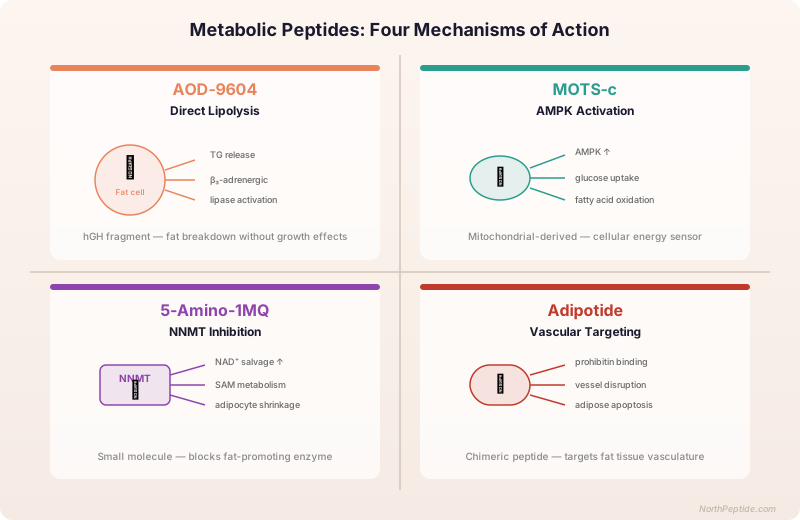
What makes this group of metabolic peptides particularly interesting for research is that they attack fat metabolism from four completely different angles. AOD-9604 directly stimulates lipolysis, the breakdown of stored triglycerides in adipocytes. MOTS-c reprograms cellular energy metabolism through AMPK activation, shifting the metabolic balance toward glucose utilization and fat oxidation system-wide. 5-Amino-1MQ targets a specific enzyme that governs the NAD+/SAM metabolic axis in adipose tissue, increasing energy expenditure without appetite effects. Adipotide bypasses metabolic signaling entirely, instead using vascular targeting to physically destroy the infrastructure supporting fat tissue.
This mechanistic diversity is significant because it suggests multiple independent pathways through which fat metabolism can be modulated. For researchers designing metabolic studies, understanding these distinct mechanisms helps frame hypotheses about pathway interactions, potential synergies, and the fundamental biology of energy storage and expenditure.
The Broader Landscape: Beyond GLP-1
The GLP-1 receptor agonist class has dominated metabolic research for good reason: the clinical efficacy data for semaglutide, tirzepatide, and retatrutide are extraordinary. But several important questions remain that these four non-GLP-1 peptides help address. Can lipolysis be stimulated without full growth hormone receptor engagement? AOD-9604 research suggests yes. Do mitochondria regulate whole-body metabolism through encoded peptide signals? MOTS-c research strongly supports this idea. Can a single metabolic enzyme serve as a lever for shifting energy balance? The NNMT/5-Amino-1MQ data argues that it can. Can tissue-specific vascular targeting modify organ mass in primates? Adipotide demonstrated this proof of concept.
For an overview of how GLP-1 receptor agonists fit into the broader metabolic research landscape, see our guide to GLP-1 and incretin peptides in research.
Products mentioned in this article:
Related Articles
Summary of Key Research References
| Study | Year | Type | Focus | Reference |
|---|---|---|---|---|
| Heffernan et al. | 2001 | Preclinical | AOD-9604 and hGH effects on lipid metabolism in obese mice | PubMed 11713213 |
| Lee et al. | 2015 | Original Research | MOTS-c promotes metabolic homeostasis and reduces obesity | PMC4350682 |
| Kim et al. | 2018 | Original Research | MOTS-c nuclear translocation in response to metabolic stress | PMC6185997 |
| Kraus et al. | 2014 | Original Research | NNMT knockdown protects against diet-induced obesity | PMC4107212 |
| Neelakantan et al. | 2018 | Original Research | 5-Amino-1MQ reverses high-fat-diet-induced obesity in mice | PMC5826726 |
| Kolonin et al. | 2011 | Primate Study | Adipotide causes weight loss in obese monkeys | PMC3666164 |
| Barnhart et al. | 2011 | Preclinical | Adipotide-induced apoptosis in adipose endothelium | PMC2844838 |
| Ryu et al. | 2021 | Review | Roles of NNMT in obesity and type 2 diabetes | PMC8337113 |
| Mangalhara & Bhatt | 2023 | Review | MOTS-c: a promising mitochondrial-derived peptide | PMC9905433 |
| Moody et al. | 2001 | Preclinical | Metabolic studies of AOD-9604 lipolytic domain | PubMed 11146367 |
Written by NorthPeptide Research Team
Ready to explore research-grade peptides?
Research Disclaimer
For laboratory and research use only. Not for human consumption.
This article is intended solely as a summary of published scientific research. It does not constitute medical advice, treatment recommendations, or an endorsement for any therapeutic purpose. The research discussed herein is predominantly preclinical, and results may not translate to human outcomes. Researchers should consult relevant institutional review boards and regulatory guidelines before designing studies involving these compounds.
NorthPeptide supplies research-grade peptides for legitimate scientific investigation. All products are sold strictly for laboratory and research purposes.